MTU® creates excitement in Europe
MTU®, IntraCrop’s award-winning biostimulant technology, is causing excitement in Europe. As a novel single-molecule product on the market, MTU® has already made waves on the European and international stage after it was presented at the Biostimulants World Congress, at FIMA Agricola and as a topic of discussion for Phytoma Meets.
MTU®, which has been referred to as ‘a groundbreaking new offering for growers’, was developed by scientists at the Institute of Experimental Botany, part of the Academy of Sciences of the Czech Republic, in 2013. Dr Jaroslav Nisler, who led on this development, said, “Young wheat leaves cut from growing plants and immersed in a weak solution of MTU® were still green after five days in total darkness, while the control ones in just water were showing significant and irreversible signs of senescence.
“Injury from the clipping process and lack of light are usually enough to induce chlorophyll breakdown in leaves, and water does little to slow down the yellowing and tissue deterioration associated with this process, but the MTU® was obviously doing something special. Chlorophyll in plants is constantly being rebuilt. The half-life of chlorophyll is from one to a few days, so new molecules are constantly being rebuilt to keep the plant productive and healthy. If you can block the degradation of chlorophyll without slowing down its synthesis, levels build up in the plant as old molecules remain in the cells while new ones are made.”
How does MTU® work?
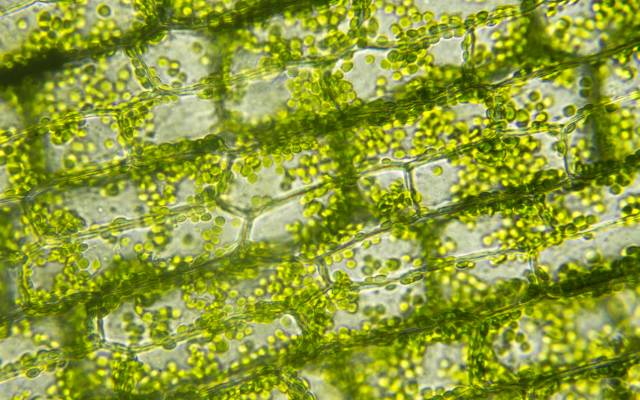
Under normal conditions, MTU delays age-related senescence of leaves by blocking the degradation of the photosynthetic apparatus, increasing chlorophyll and carotenoid pigment content, improving chlorophyll retention so plants have higher photosynthetic activity. This increases carbon assimilation resulting in faster crop growth and yield increases. Under stressed conditions, MTU enhances Photosystem I (PSI) activity and enhances cyclic electron flow around PSI by 80%, resulting in increased ATP production providing energy for sugar production and growth during periods of abiotic stress.

Jaroslav continues, “We haven’t really seen anything like it in Europe before. The fact that MTU® achieves the results it does at dose rates of just 0.5g/ha underlines just how unique it is. It has been seen to increase chlorophyll levels by as much as 20%. The more chlorophyll there is, the greater the rate of photosynthesis, the more CO₂ assimilation takes place, the more sugars are produced and the healthier the crop is.
“The process also improves nitrogen use efficiency by increasing the critical carbon to nitrogen ratio in the plant, as well as building the resilience required to deal with the greater abiotic stresses now increasingly experienced in crop production. In trials with wheat, leaves exposed to periods of drought, heat or salinity, for example, those treated with MTU® remain green for longer and recover much better after rewatering or when the stress is removed.”
MTU® also stimulates AHK3 (a cytokinin receptor) increasing primary and lateral root growth. The increased root area available for uptake improves nutrient use efficiency and increases resilience to abiotic stress.
“MTU® is a very weak cytokinin and while cytokinins generally inhibit primary root growth, MTU® appears to work on one specific receptor, and this actually encourages plants to build bigger roots,” Jaroslav explains. “MTU® therefore provides the benefits of cytokinins, such as anti-senescence properties and reduction in the effects of stress, without their negative effects on root growth.”
When the plant is healthy, MTU® can increase stem growth by up to 10%, and as much as 20% in root growth. However, under stress, such as drought, this root growth can be as high as 40%.
MTU® is available solely through IntraCrop in the UK, via its flagship product Status, where it is paired with complementary biostimulant technology pidolic acid, a signalling compound at the heart of the nitrogen assimilation cycle. If pidolic acid applications are made to plants prior to or during stress, they allow the nitrogen assimilation cycle to continue. This limits the build-up of ammonia and permits the retention of more green leaf area.
Throughout its development, a wealth of independent trials in a variety of countries, climates and on a wide range of crop types, allowed the team to ensure that the best possible advice is given to growers and agronomists. In the UK, trials exploring mitigation against nutrient loss, to building crop safety and improving nutrient use efficiency, data has clearly evidenced that MTU® has a significant and positive impact on both stressed and healthy plants including OSR, Spring cereals, winter wheat and vegetables. In Europe, IntraCrop has seen great success in Sweden, France, the Mediterranean and beyond. Many people who have witnessed its impact have described it as ‘genuinely groundbreaking’.
Emily Way, IntraCrop Technical Officer, explains why meeting in-country regulations for MTU® is important, saying, “A key part of this has been to bring MTU® and its associated products through the appropriate regulatory frameworks wherever it is used, ensuring it is recognised as a bona fide product for growers with proven results and quantifiable benefits. It’s already a patented product with a lot of independent work published, but we really want to make sure the science, the trials and the knowledge around MTU® stack up 100%.
“There are currently no regulations for biostimulants in the UK and they don’t even have to be authorised or registered anywhere as long as they don’t claim any direct effect on pests or diseases. Europe is ahead in this respect and follows the implementation of the Fertilising Products Regulation which now includes biostimulants, subjecting them to a stringent review of claims.
“The real beauty of MTU® in all this is that it’s a single molecule that can be clearly identified, and its specific mode of action is understood. This means we can clearly define a dose rate for it with realistic expectations of what it can deliver in the field.
“Improvements in chlorophyll production and photosynthetic activity typically range from 20-50% depending on circumstances, and this translates into yield benefits of 5-20% — with the more the stress on the plant, the greater the response to MTU®,” notes Emily.
“MTU® has a proven effect on chlorophyll levels, while pidolic acid helps to increase nitrogen assimilation in plants. This was shown in winter wheat trials at Poznan University in Poland, which revealed a yield response of up to 25% when this combination was applied at GS 32-33.”
“We’ve seen fantastic results with sunflowers in Hungary and trials in Cambridge with sugar beet have shown a root weight increase of 11t/ha — up from 57.19 to 68t/ha — worth an extra £418/ha at the time of the trials. All in all, we’re really excited about what MTU® brings to crop production — whether it’s broadacre agriculture or more specialist areas such as vegetables and other crops.
“As weather extremes become more prevalent, abiotic stress on crops will increase and MTU®’s mode of action can help mitigate this in so many different ways whether it’s reducing the effects of stress, making better use of nitrogen, or delivering higher yields from less inputs.”
1st May 2024
