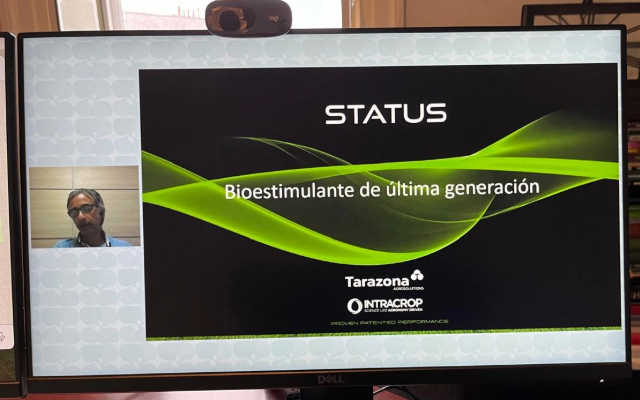
Status hailed as ‘New Generation Biostimulant’ at Phytoma Meets
On 21st March, Status was presented by Gianluca Valieri, Technical Director of Tarazona Agrosolutions for Phytoma Meets.
Phytoma Meets is a webinar run by Phytoma Espana, a Spanish-based journal on plant health, which has just celebrated its 30th anniversary. Its technical, scientific content aims to disseminate the results and experience of researchers on topics surrounding crop health. It aims to support current professionals and students on real issues facing growers, organising a range of conferences at universities and its International Symposium that has run since 1990.
Phytoma Meets was created to provide international meeting points covering various topics in more detail than the current Symposium format allows for. They began in 2010 and now the webinars regularly reach over 400 attendees from countries across the Mediterranean.
Gianluca’s presentation referred to Status as a ‘New Generation Biostimulant’ and covered how it helps growers mitigate against the impact of climate change. Hotter, drier weather has been experienced globally and looks set to continue. These conditions put crops under stress by increasing the concentration of damaging free radicals that lead to early plant senescence and reduced yield. Status contains our award-winning technology MTU®, which has been proven to protect the photosynthetic apparatus under stressed conditions and delay senescence. It also contains pidolic acid that increases root growth and nitrate assimilation both under stress and in normal conditions. Treated plants maintain green leaves for longer and recover more quickly from drought, protecting yield even during periods of extreme weather.
Andrew Low, Account Manager, says, “Status was given a 15-minute slot in this prestigious online event. Gianluca gave a comprehensive description of the principal components of Status and the proven benefits. It was very well received, and we want to thank Gianluca for doing such a fantastic job of explaining how Biostimulants, and Status in particular, support growers battling extreme weather and climate-related difficulties. We look forward to hearing the positive results locally and seeing the difference it will make.”
22nd March 2024
