Adjuvants and spray additives are used with crop protection products to improve their efficacy.
This can be achieved by increasing the range of conditions in which a product may be used, by modifying the physical characteristics of the spray solution or by increasing the activity of the plant protection product.
- Find out how Adhere supports with herbicide efficacy
- Find out why water conditioners like Inferno support blackgrass control
Below is further information, FAQs and a list of our agricultural adjuvant and spray additives. If you would like to know more, you can arrange a callback.
Anti-foam
Many crop protection products will foam up during tank filling, slowing down the process. The addition of an anti-foam agent such as No-Foam or Inferno will eliminate foam production and speed up tank filling. Always add to the spray tank first, prevention is better than cure.
What is an anti-foam adjuvant?
Anti-foam adjuvants reduce the formation of foam forming when spray agents are mixed together. Reducing foam will significantly improve control at application and stabilises the formulation.
Water conditioners, water softeners and pH buffers
Managing hard water In hard water, mineral ions such as calcium (Ca++) and magnesium (Mg++) can reduce the efficacy of certain plant protection products. Some actives need only pH adjustments, whilst others benefit from active hardness management otherwise insoluble salts may be formed. Classically, glyphosate forms insoluble Ca-glyphosate in hard water reducing performance.
Water conditioners (e.g. ammonium sulphate based) do not have a direct impact on water hardness themselves, instead they work by compensating the effects of water hardness by interacting with cations (Ca++ and Mg++) to produce stable, soluble salts. As an example, when used with glyphosate in hard water they make glyphosate soluble salts with NH4+ counterions instead of insoluble Ca-glyphosate salts.
What is water softener used for?
Water softeners actively reduce water hardness by inhibiting, sequestering or neutralising the hardness itself. Softened water is widely accepted as water that has had its water hardness irreversibly reduced.
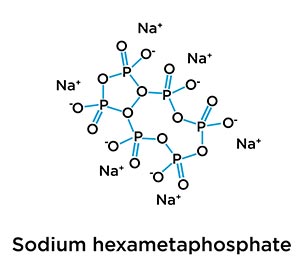
Sodium hexametaphosphate sequesters or locks away the mineral ions in hard water inside their ball-like structures to stop them interacting with active ingredients. The resulting large molecules or ‘complexes’ are very stable and will not break down again.
Water softeners should be used in the same way as a generic water conditioner but are particularly appropriate when the water is both hard and alkaline.
Managing water pH Many active ingredients in plant protection products perform best in a slightly acidic environment, but some are sensitive to alkaline water and break down more quickly, reducing efficacy. IntraCrop produces water conditioners with built-in pH buffers, which offer improved performance by reducing the spray water pH to the optimal 5.0 – 6.0. The lower pH also improves the water conditioner’s affinity for the cations, ensuring they are solubilised, preventing the formation of insoluble cation compounds.

Spray modifiers
Managing Drift Effective spray application increases product performance by providing accurate droplet deposition and reducing off target spray drift, protecting the surrounding environment and reducing waste.
Spray droplets under 100μm are prone to drift. Boom height is the most important factor influencing the amount of spray drift – raising the boom height from 50 to 100cm can increase the amount of spray drift by 4 – 10 times, depending on nozzle type. However, raising the boom height is also a practical necessity for example when spraying stubbles or pre-emergence herbicides to avoid damage to the boom.
Other factors that can influence spray drift include wind speed, width of spray fan, sprayer speed/boom stability and local weather conditions.

Effective drift reduction IntraCrop products that reduce spray drift include the polyamide-based Inferno and oil based adjuvants such as Evoque and Adhere.
Source: IntraCrop trial conducted by Silsoe Spray Applications Unit 2019.
In this trial the addition of Inferno to glyphosate sprayed with a boom height of 70cm reduced the amount of spray drift to below that achieved with glyphosate alone sprayed at 50cm.
Glyphosate 4/ha in 100 l/ha spray volume
Nozzle: Teejet 11003 flat fan
Pressure: 3.0 bar
Forward speed: 8 km/h
Wind speed: 2 m/s

To download specific product information click here.
Foliar and soil adjuvants
Adjuvants are used with crop protection products to improve their efficacy, maximising spray coverage or increasing uptake for example.
The choice of adjuvant will depend on the target surface, the formulation and the application technique. IntraCrop is a leading supplier of foliar and soil adjuvants, blending different effective adjuvant components to meet the needs of the partner plant protection product.
Reduce reflection or “bounce”
A reduction in dynamic surface tension of the droplets reduces the likelihood of the droplets bouncing off the target surface, increasing spray retention.
Improve coverage
Reducing surface tension of spray droplets improves their ability to spread over the target surface even at low water volumes.
Increase adhesion
Sticker or Extender adjuvants increase the adhesion of the spray deposit to the target surface (e.g. leaf), helping the spray droplet resist removal by rain, wind, mechanical or chemical action.
Improve penetration
Matching the right adjuvant choice to the plant protection product is important. Water soluble plant protection products enter the leaf through diffusion, but the waxy cuticle is a significant barrier. Lipophilic based adjuvants like oils and specific surfactants improve the rate of penetration, increasing the absorption of the active ingredient into the plant.
Reduce UV degradation
Certain crop protection active ingredients are affected by UV light and the correct adjuvant component can help.
Anti-transpirants
These reduce the rate of water loss from crop leaves, increasing yield in drought conditions.
Soil deposition
Pre and early post emergence residual herbicides benefit from adjuvants that not only reduce drift but ensure that spray droplets are evenly deposited, coating the soil surface to improve efficacy.
Soil adsorption
Increasing the adsorption of residual herbicides to soil clay and organic matter ensures the herbicide is retained in the upper soil layer where most weeds germinate, improving control. Reducing leaching of the herbicide not only improves crop safety but is better for the environment.


Pod Sealants
Pod Sealants are polymer and surfactant blends designed to prevent pod shatter in oilseed rape and legume crops.
The use of a pod sealant at growth stage 80, the pod’s ‘green and bendy’ stage, will protect against shatter for up to 60 days, protecting yield and reducing volunteers in the following crop.
Pod sealants may also be applied later, in combination with desiccants. Arrest P is an advanced formula pod sealant for use on oilseed rape, beans and soya.

