
Status® is CE-marked under the European Fertilising Products Regulation (Regulation (EU) 2019/1009) for broadacre arable, woody perennials and vegetables. It is certified for efficacy claims including quality and yield, abiotic stress and nitrogen use efficiency. To support these claims, IntraCrop has accumulated trials data over a five year period. In the 2023 – 4 season we gathered data from 115 active trial sites, for 18 crops, in 15 countries in Europe as well as Canada, South America, India and New Zealand.
Status® contains the award-winning molecule MTU®, partnered with pidolic acid. MTU® and pidolic acid offer complementary modes of action to increase plant response, by combining effects of pidolic acid on nitrogen assimilation and MTU® on photosynthesis. In healthy conditions, Status® increases green leaf retention and improves nitrogen use efficiency, resulting in higher yield and less reliance on traditional fertilisers. In stressed conditions, Status® protects the photosynthetic apparatus and improves plant resilience, resulting in quicker stress recovery, protecting yield.

Status® is now CE-marked in the EU for Nitrogen Use Efficiency. During 2023, Status® was trialled across a variety of crops and countries to prove its efficacy in improving Nitrogen Use Efficiency. In Szalanta, one treatment of 0.25l/ha of Status® was applied to grain maize at BBCH 13. This resulted in a yield increase of 0.9t/ha under a 40kg/ha nitrogen regime when compared with the 40 kg/ha nitrogen control. In this trial, 40 kg/ha nitrogen in combination with one application of Status® yielded the same as the 80 kg/ha nitrogen input. This would therefore provide £44.50/ha ROI (based on a selling price of ~£180/t and a Nitrogen price of £1.10/kg).
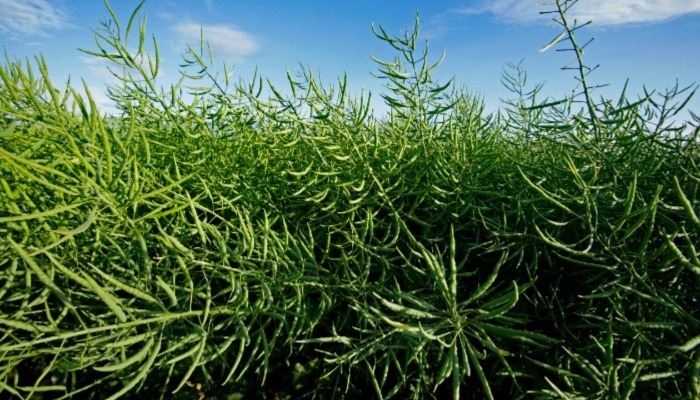
Status® contains our award-winning biostimulant technology MTU®. In stressed conditions the concentration of oxygen free radicals in the plant is increased, causing damage to internal organs and leading to early plant senescence. MTU® protects the photosythetic apparatus under stressed conditions, excess energy is dissipated, the activity of Photosystem I (which normally degrades first) is maintained, and thus Photosystem II is protected for longer. Under stressed conditions MTU® treated plants are maintained for longer and recover more quickly. By doing so, yield is protected even during periods of extreme weather.
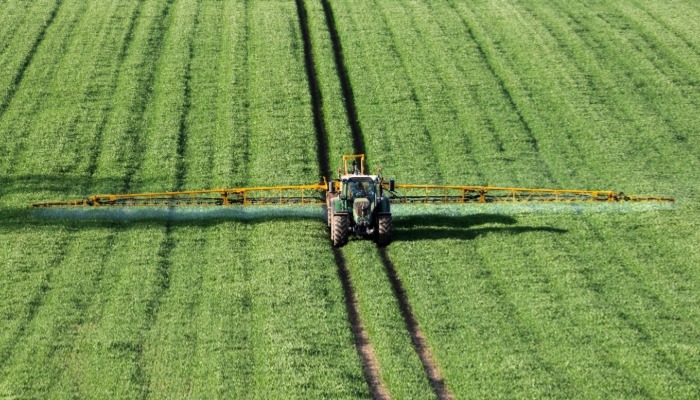
As well as protecting the plant from abiotic stress in extreme weather conditions, which in itself protects crop yield, MTU® also increases root growth in healthy conditions, improving crop quality and yield. Status’® other biostimulant technology is pidolic acid, which increases nitrogen assimilation and root and shoot growth. Status® has proven itself to increase yield in healthy conditions and protect yield in periods of extreme weather in a variety of crops, including an average of 0.38 t/ha increase across 28 European winter wheat trials from 2020-2022.
Wide range of crops
Status® is CE-marked for use on broadacre arable crops, woody perennials and vegetables. Trials have shown positive results across 18 crops, including cereals, maize, potatoes, oilseed rape, fruit trees and vines.
MTU® improves photosynthesis and protects the photosynthetic apparatus under stress, while pidolic acid enhances nitrogen assimilation and promotes root and shoot growth. Together, they increase yield potential in both healthy and stressed conditions.
Trials have demonstrated that Status® can deliver comparable yields to higher nitrogen input regimes by improving nitrogen use efficiency, enabling reduced fertiliser rates without compromising output.
Timing will depend on crop type, but generally Status® should be applied during early vegetative growth stages to support nitrogen assimilation and green leaf retention, or ahead of forecast stress events to improve resilience.
MTU® reduces damage from oxygen free radicals generated during stress, maintaining the integrity and activity of Photosystem I and II. This allows plants to sustain photosynthesis longer and resume growth faster after stress events.
Across 28 European winter wheat trials between 2020–2022, Status® delivered an average yield increase of 0.38 t/ha. In maize, trials have shown equivalent yields to higher nitrogen regimes, providing both yield stability and input savings.
Absolutely. In healthy crops, Status® increases photosynthetic capacity, root growth and nitrogen use efficiency, maximising yield potential even when conditions are favourable.
Status® can be used alongside granular or foliar nitrogen sources as part of a strategy to optimise nutrient efficiency, reduce environmental impact, and improve return on investment.
Status® is readily compatible with many commonly used tank-mix partners. Always add to the spray tank first and follow standard mixing protocols.
By improving NUE and reducing fertiliser dependency, Status® lowers the risk of nitrate leaching and nitrous oxide emissions, supporting more sustainable and climate-resilient crop production.

‘Science led, Agronomy driven’ are registered trademarks of IntraCrop Ltd.
All trademarks acknowledged
©IntraCrop 2026
