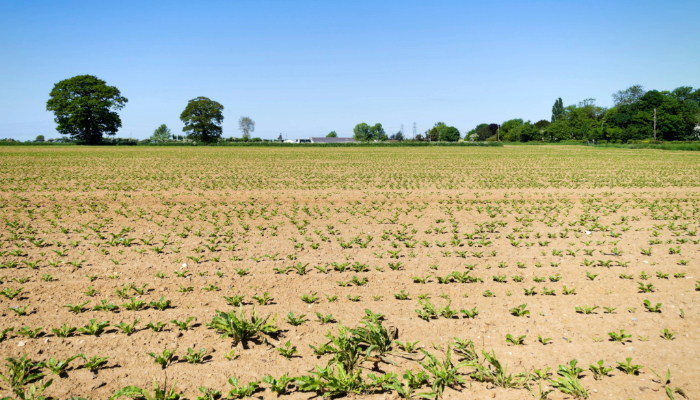
Abiotic stress is caused by several factors. Climate change has resulted in plants being exposed to periods of abiotic stress (drought, heat, salinity) more often during the growing season, reducing yield and quality. As it stands, abiotic stress globally is presenting enormous challenges for growers. Our climate is changing, and our population is growing. When plants come under stress, it can severely impact yields or even lead to entirely failed crops. Those crops that do survive are often of poor quality and therefore less nutritionally valuable or economically viable. A variety of crops can suffer under stress, particularly cereals, potatoes, maize and sugar beet. However, biostimulant technologies are proving effective in mitigating the adverse effects of abiotic stress on crops.
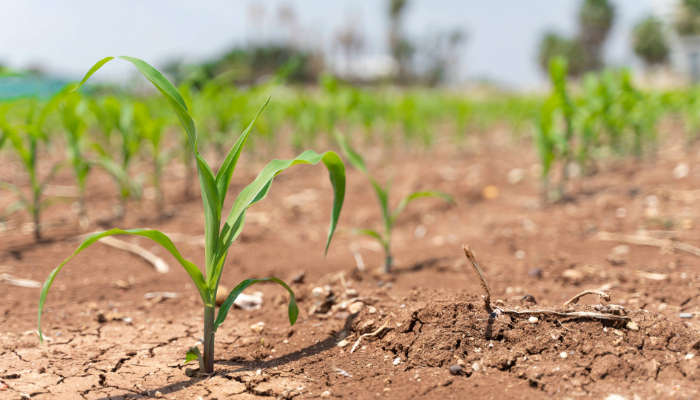
Status® contains our award-winning biostimulant technology MTU®. In stressed conditions the concentration of oxygen free radicals in the plant is increased, causing damage to internal organs and leading to early plant senescence. MTU® protects the photosythetic apparatus under stressed conditions, excess energy is dissipated, the activity of Photosystem I (which normally degrades first) is maintained, and thus Photosystem II is protected for longer. Under stressed conditions MTU® treated plants are maintained for longer and recover more quickly. By doing so, yield is protected even during periods of extreme weather.

In challenging conditions, Talisman® can be used at the onset of abiotic stress (e.g. drought, heat, rapid growth) to help alleviate symptoms. The pidolic acid maintains chlorophyll concentration and green leaf retention, reducing toxic ammonia build up and associated leaf yellowing. In stressed conditions, R100 and dimethyl sulphone ensure foliar nutrients are readily available to maintain the plant and prime it for recovery.
RootMan-Z enhances establishment and early growth in arable crops, annual fruit and vegetables. Manganese and zinc are required for plant growth to help photosynthesis and boost auxin levels. Nutrino Pro improves nutrient use efficiency and boosts cytokinin levels in plant tissues, increasing photosynthetic capacity and maintaining green leaf retention. Nitrogen Use Efficiency (NUE) of traditional soil applied fertilisers can be as low as 30% in a dry spring, but is typically. In contrast, Nutrino Pro offers more than 95% NUE, even in dry conditions. This is achieved by the unique combination of controlled release nitrogen and plant biostimulants.
Salinity, where salt levels in the soil become too high, can cause abiotic stress and inhibit plant health, growth, and productivity. It’s one of the most common causes of environmental stress in arid and semi-arid regions, or in areas with poor irrigation management.
It will typically occur if there is an accumulation of soluble salts (e.g. sodium chloride) in the soil, if there is irrigation with saline water or poor drainage. In coastal or desert areas, this can occur naturally. When salt levels are too high, it impacts the crop’s ability to take up water and nutrients.
Salt stress is a major abiotic stress causing severe damage to plants by way of affecting at all morphological, biochemical, and molecular levels. It retards the growth of plants, reduces photosynthesis, and causes oxidative harm.
Salinity stress work was done at Palacky University on MTU and its effect on salt tolerance of young plants.
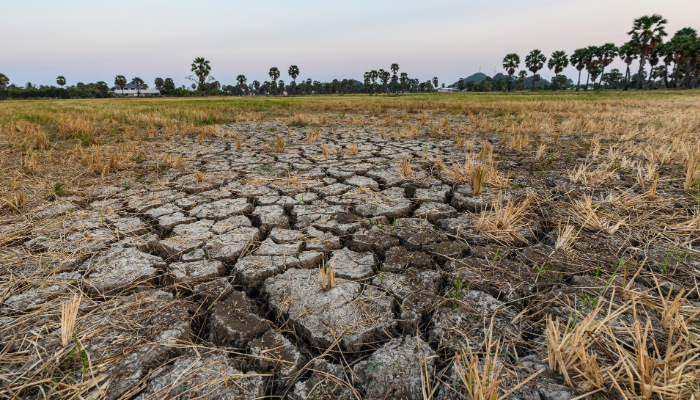
As our climate changes, drought is rapidly becoming one of the most common causes of abiotic stress affecting growers. It occurs when water availability is less than what the crops needs in order to complete normal physiological processes. Drought can occur if there is a lack of rainfall, temperatures become extreme, or soil is sandy or compacted and therefore does not retain water well. When plants can’t get the water they need from the soil, they will struggle to maintain normal cellular functions. Low moisture content in soils also slows down nutrient uptake. This will lead to a reduction in photosynthesis and growth, stunting growth and causing discolouration and wilting of the crop, which can lose leaves, fruit or die altogether.
Biostimulants can help to improve water use efficiency by stimulating deeper and stronger root growth, giving better access to water. These root systems will also therefore have better access to nutrients, even under a reduced fertiliser regime.
Abiotic stress can occur when temperatures rise above any given crop’s optimal range, especially during sensitive growth stages such as flowering, seed set, or fruit development. It can often happen in combination with or alongside drought. It can occur when temperature suddenly spikes, during heatwaves, or over a prolonged period of exposure.
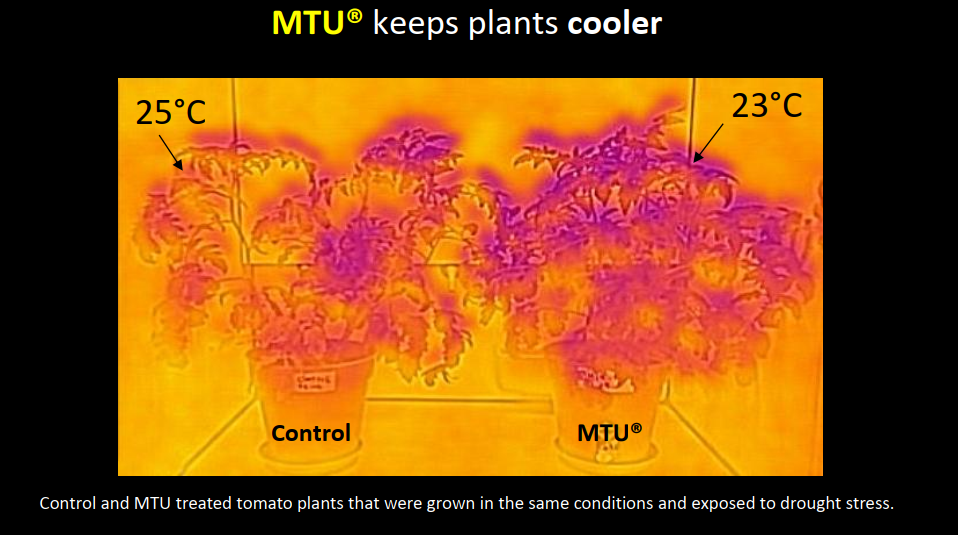
High temperature disrupt photosynthesis, which can slow down or even stop when temperatures exceed 35 degrees. This will leave crops starved of energy, reducing growth and therefore yield. Plants will lose water more rapidly in the heat, making heat and drought stress in combination a very dangerous level of stress for a variety of crops. In extreme cases, heat can trigger cell death when proteins and membranes lose structure. Crops vary in their sensitivity to heat stress, with sugar beet and potatoes particularly susceptible. Tuberisation in potatoes starts to slow down in temperatures as low as 23 degrees, stopping completely when temperatures hit 27 degrees.
Biostimulants can improve water retention and therefore improve cooling efficiency. By stimulating stronger and more substantial root growth, crops have better access to water and nutrients. There is also evidence that they can influence key hormone levels, which helps to delay leaf senescence and allow the plant to photosynthesise better for longer. Biostimulants can also help cool the surface of the leaf relative to the outside temperature by increasing transpiration rates.
Herbicide-induced abiotic stress is less-talked-about but is becoming increasingly relevant. Unfortunately, herbicides can unintentionally harm non-target plants or crops due to: drift from nearby applications; residual herbicides in the soil from previous treatments; over-application, incorrect timing or product; tank or sprayer contamination; or weather effects, such as heavy rain or intense sun following application.
Abiotic stress caused by herbicides can cause chlorosis and leaf damage, impacting chlorophyll production as leaves lose their green pigment. This in turn disrupts photosynthesis, stunting plant growth. Some herbicides negatively impact root function, therefore limiting water and nutrient uptake. All these factors can reduce crop growth and therefore growers’ yields.
Sunflower trials conducted by the University of Debrecen in Hungary investigated the benefits of applying Status in sequence with an Imazamox herbicide. Under increasing light intensities, the photosynthetic intensity was measured when plants were treated with 5 different treatments. Across all light intensities, the untreated control and Imazamox treated, had the lowest photosynthetic intensities. However, when Status was applied 4 or 10 days after herbicide application, this is when the highest photosynthetic intensities were recorded.
Root and shoot dry mass results also showed the benefit of applying Status in sequence with an Imazamox herbicide. Applying Imazamox alone decreased the dry mass below the untreated control. However, when Status was applied 4 days post herbicide application, the dry masses recorded were higher than the untreated control and there was a 34% increase relative to the Imazamox treatment.
Biostimulants can support chlorophyll production, helping to maintain photosynthetic activity. They support the crops’ natural growth and development, especially roots and shoots, which will improve nutrient use efficiency and uptake if roots become damaged and making them more resilient to future applications or other stress events.
Abiotic stress is non-living environmental stress that negatively impacts plant growth, yield or quality. Common causes include drought, heat, salinity, and herbicide damage. These stresses can slow growth, reduce photosynthesis and, in severe cases, cause total crop loss.
Climate change is increasing the frequency and severity of extreme weather events and exposing crops to stress more often during the growing season. This, combined with rising global food demand, makes mitigating abiotic stress a major challenge for sustainable agriculture.
A wide variety of crops can suffer yield and quality losses, but cereals, potatoes, maize, sugar beet and oilseed rape are particularly vulnerable to drought, heat, salinity and herbicide-induced stress.
Biostimulants can improve water use efficiency, stimulate deeper root growth for better water and nutrient access, maintain chlorophyll levels for longer and protect photosynthetic apparatus. This helps plants stay productive for longer, even in extreme conditions.
Status® contains MTU®, which protects the photosynthetic apparatus under stress by maintaining Photosystem I and II activity, dissipating excess energy, and delaying leaf senescence. This leads to quicker recovery and yield protection during drought, heat or salinity events.
Talisman® combines pidolic acid and R100 biostimulants with foliar nutrients. It maintains chlorophyll concentration, improves green leaf retention, and ensures nutrients are available to support recovery from drought, heat, or rapid growth stress.
RootMan-Z enhances early root and shoot growth, improves photosynthesis via manganese and zinc nutrition and increases nutrient use efficiency. This makes crops more resilient to early-season stress events.
Nutrino Pro combines controlled-release nitrogen with plant biostimulants to achieve over 95% NUE, even in dry springs, compared with as low as 30% NUE from traditional fertilisers under the same conditions.
High salt levels reduce a plant’s ability to take up water and nutrients, slowing growth and reducing photosynthesis. In MTU trials at Palacky University, salinity stress symptoms were significantly delayed and reduced in MTU-treated plants.
Both stresses reduce water availability, limit nutrient uptake, slow photosynthesis and cause wilting, leaf loss and stunted growth. Potatoes and sugar beet are particularly sensitive, with tuberisation halting at temperatures above 27°C. Biostimulants can improve root systems and water retention, helping plants cool more efficiently.
Herbicide stress occurs when crops are unintentionally damaged due to drift, soil residues, over-application, contamination or adverse weather after spraying. This can cause reduced chlorophyll production and impaired root function. Trials in Hungary showed that applying Status® after herbicide use improved photosynthetic activity and increased root and shoot mass.
Reducing abiotic stress losses means more stable yields with fewer inputs, better resource efficiency, and improved food security, key goals for sustainable agriculture in a changing climate.

‘Science led, Agronomy driven’ are registered trademarks of IntraCrop Ltd.
All trademarks acknowledged
©IntraCrop 2026