Why does Photosystem I matter?
Photosynthesis is a vital part of crop productivity and it uses Photosystem I and II to do this. Put simply, it is the process through which plants capture light energy and convert carbon dioxide and water into sugars. These sugars fuel growth and biomass production, which ultimately increases yield.
Unfortunately, photosynthesis is highly sensitive to environmental conditions. Drought, extreme temperature and other forms of abiotic stress such as salinity and herbicide use can disrupt the photosynthetic apparatus in the cell, reducing the plant’s ability to make the best use of available light. Ultimately, this limits its productive potential.
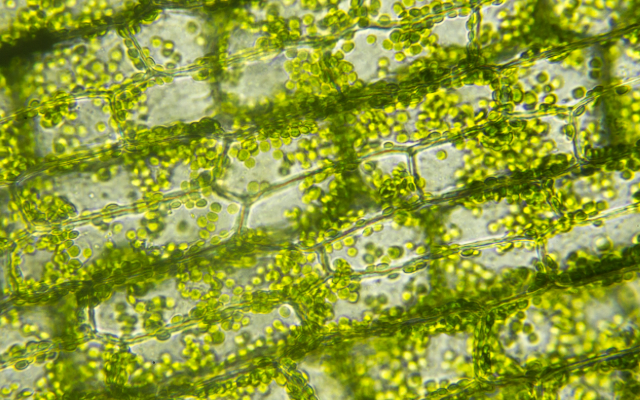
Photosynthesis takes place via a series of interconnected processes within the chloroplast. Two major protein complexes, Photosystem II and Photosystem I, work together to capture light energy and drive electron transport. Photosystem I plays a vital role towards the end of this electron transport chain. The high-energy electrons generated contribute to the production of ATP and NADPH. Both of these compounds are then used by the plant to fix carbon dioxide and generate the compounds needed for growth.
If environmental stress disrupts this, excess damaging reactive oxygen species can accumulate. When the plant cannot dissipate or redirect these reactive oxygen species effectively, photosynthetic efficiency can decline and damage can occur to the plant cells and photosynthetic apparatus. Supporting the mechanisms plants use to protect their photosynthetic apparatus is therefore imperative to make sure that the crop reaches its full potential.
MTU® – 1-(2-methoxyethyl)-3-(1,2,3-thiadiazol-5-yl) urea is a biostimulant technology developed by IntraCrop and the Experimental Botany at the Czech Academy of Sciences. Research into MTU® has repeatedly shown that it supports Photosystem I. MTU® increases photosynthetic pigment levels associated with PSI and supports cyclic electron flow around it. Cyclic electron flow provides an alternative route for electrons and contributes to ATP generation, helping plants to manage better under stressful conditions.
Instead of allowing excess electrons to place further pressure on the photosynthetic system, cyclic electron flow can help redirect them and contribute to the generation of ATP. In practical terms, this supports the plant’s ability to protect the photosynthetic apparatus and maintain physiological activity even if conditions become challenging.
MTU® also supports green leaf retention. A leaf that remains green and physiologically active for longer has more opportunity to capture carbon dioxide and manufacture the energy-rich sugars required for growth and yield formation. Improving green leaf retention gives crops greater opportunity to continue assimilating carbon and supporting yield formation, rather than entering premature senescence.
Stress occurring during rapid canopy growth, flowering or grain filling can restrict the amount of photosynthetically active tissue available to the crop. Protecting photosynthetic function during these periods can therefore contribute to improved crop resilience.
There is also an important relationship between photosynthesis and nitrogen use efficiency. As plants increase photosynthetic activity and assimilate more carbonthey require sufficient nitrogen to maintain an appropriate carbon-to-nitrogen balance and build proteins, enzymes and new tissue. This means that technologies supporting improved photosynthetic performance can also influence crop utilisation of nitrogen.
Research with Status®, which combines MTU® with pidolic acid, has investigated this across a wide range of trials. This has shown that the complementary effects of MTU® on photosynthesis and root development, alongside pidolic acid’s role within nitrogen assimilation, can improve nitrogen use efficiency. Status® is CE marked under the EU FPR for this modality. The result is a plant that is better equipped to access and use the nitrogen available to it.
Temperature, rainfall, soil type, crop variety, nutrient availability and the timing and severity of environmental stress all vary from season to season and field to field. For this reason, physiological research needs to be supported by extensive field validation.
This work will be discussed in detail at the 2026 Biostimulants World Congress in Sacramento, where Jaroslav Nisler of the Institute of Experimental Botany, Czech Academy of Sciences, will present “Photosystem I stabilization by MTU decouples yield from nitrogen inputs at continental scale.” The Congress selects scientific presentations through its scientific committee, with the 2026 programme specifically focused on evidence-based approaches to crop resilience and yield optimisation.

