Talisman: Supporting Oilseed Rape Performance at Early Flowering
Following a challenging start to the season, many oilseed rape crops across the UK are now approaching early flowering under variable conditions. A wet winter, combined with fluctuating spring temperatures and periods of rapid drying, has created a complex environment where crops are often carrying underlying stress into key reproductive stages.
At early flowering, crop demand increases significantly, making this a critical point for supporting plant performance and protecting yield potential.
While above-ground conditions may appear to be improving, many OSR crops are entering flowering with:
- compromised root systems following a wet winter
- restricted nutrient uptake during early spring
- uneven canopy development
- reduced biomass accumulation
These factors can limit the plant’s ability to fully support, flower retention, pod set and nutrient redistribution. At this stage, even short periods of stress can have a disproportionate impact on final yield.
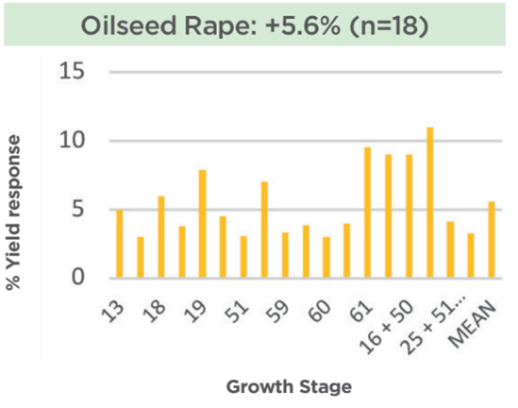
The early flowering window (GS60–63) is an important part of OSR development. During this phase nutrient demand increases rapidly and metabolic activity is high. The plant also begins prioritising reproductive growth and therefore has less available energy.
If crops are already under stress, they may struggle to sustain flower development and efficiently utilise available nutrients. Supporting the plant at this point is therefore essential to maintaining momentum through the remainder of the season.
Talisman is designed to support crops during periods of environmental stress by enhancing natural physiological processes.
At early flowering in OSR, its role is to:
- support root activity and function, improving access to water and nutrients
- enhance nutrient uptake and utilisation during peak demand
- maintain plant metabolic efficiency under variable conditions
- support consistent crop development across the canopy
This is particularly important where earlier stress has limited the crop’s ability to fully recover ahead of flowering.
Spring 2026 has been characterised by rapid shifts in weather patterns, following prolonged wet conditions through winter. We are now experiencing drier periods and rising temperatures, but ongoing variability between day and night temperatures. These changes place additional pressure on crops at a time when demand is already increasing.
Even where conditions appear favourable, underlying limitations in root function or nutrient availability can restrict performance. Talisman provides support during this time, helping crops respond more effectively to improving, but still variable, conditions.
Yield in oilseed rape is heavily influenced by number of pods set, retention of flowers and efficiency of nutrient use during reproductive growth. Where stress limits these processes, yield potential can be significantly reduced.
By supporting plant function at early flowering, Talisman helps:
- maintain crop consistency
- improve resource utilisation
- support successful transition into pod development
In seasons where crops experience multiple stress events, timing and precision become increasingly important. Applying Talisman at early flowering provides a targeted intervention at one of the most critical points in the crop’s development, helping to ensure that earlier challenges do not define final performance.