
MTU®: photosynthesis and NUE-focused biostimulant technology
As crop production systems face increasing pressure from climate variability and the need to reduce traditional fertiliser input, maintaining efficient photosynthesis has become a priority. Photosynthesis and nitrogen assimilation are both key determinants of biomass potential. Improving these functions can lead to increases in yield. Unfortunately, they are some of the first physiological processes to be disrupted by abiotic stress.
Nitrogen use efficiency in crops is limited by energy availability. The assimilation of nitrate and ammonium into amino acids and proteins is an energy-intensive process, requiring a consistent supply of ATP and reducing power generated through photosynthesis. When photosynthetic efficiency declines, whether due to environmental stress or natural senescence, nitrogen uptake and assimilation are among the first processes to be constrained.
MTU® is a patented, single-molecule biostimulant developed by IntraCrop. Part of its function is to directly support photosynthetic performance at its most sensitive control point. By acting on Photosystem I (PSI) and enhancing cyclic electron flow (CEF), MTU® delivers a unique and well-defined mechanism of action that supports energy availability, delays senescence and improves crop resilience under both optimal and stressed conditions. Through this action, MTU® also boosts ATP production without over-reducing the photosynthetic system. This ensures that sufficient energy remains available to support nitrogen assimilation, even when crops are exposed to stress.
In addition to supporting energy supply, MTU® improves NUE by stabilising plant metabolism under fluctuating conditions. Under stress, nitrogen metabolism can become unbalanced, leading to inefficient uptake, remobilisation of internal reserves and reduced biomass formation. By maintaining photosynthetic stability and delaying metabolic shutdown, MTU® allows crops to continue assimilating and utilising nitrogen more efficiently rather than losing potential through premature senescence.
As this action increases carbon assimilation, the plant’s internal carbon : nitrogen (C:N) ratio naturally shifts. To maintain metabolic balance, plants must assimilate sufficient nitrogen to match the increased availability of carbon. This physiological requirement drives greater nitrogen uptake from the soil and more efficient incorporation into amino acids, proteins and structural biomass. By enhancing carbon assimilation while maintaining photosynthetic stability, MTU® encourages a natural, demand-driven improvement in nitrogen use efficiency rather than forcing uptake through external inputs.
Improved root development observed in MTU®-treated crops further contributes to enhanced NUE. Larger, more effective root systems increase access to both soil nitrogen and water, supporting more consistent nutrient uptake. When combined with improved photosynthetic energy availability, this allows a greater proportion of applied nitrogen to be converted into yield and quality, rather than remaining unused or lost from the system.
Unlike complex biological extracts or multi-component blends, MTU® is a defined, single active molecule, 1-(2-methoxyethyl)-3-(1,2,3-thiadiazol-5-yl) urea.
This simplicity allows MTU® to deliver a highly targeted physiological response, with consistent performance across a wide range of crops, environments and conditions. Its activity is not dependent on microbial interactions or soil conditions, making it a reliable tool regardless of location.
Under normal conditions, photosynthesis works through two vital and linked processes:
- Linear electron flow, producing both ATP and NADPH
- Carbon fixation, via the Calvin cycle, using this energy to produce sugars
However, under stress such as drought, extreme heat, nutrient limitation or low light, this can be quickly disrupted. Excess electrons accumulate in the photosynthetic apparatus, increasing the risk of oxidative damage, chlorophyll degradation and premature senescence. As chlorophyll content declines, photosynthetic capacity drops, limiting energy supply for growth, root development and nutrient assimilation.
Protecting photosynthesis under these conditions is therefore central to sustaining yield potential.
MTU® acts directly on Photosystem I, where it enhances cyclic electron flow by up to 90%. This process safely reroutes excess electrons around PSI rather than allowing them to cause oxidative damage.
The practical outcomes of this enhanced cyclic electron flow are:
- Increased ATP production to support growth and metabolism
- Protection of the photosynthetic apparatus
- Reduced chlorophyll degradation
- Delayed age- and stress-related senescence
By maintaining chlorophyll content MTU® enables crops to remain photosynthetically active for longer, even under unfavourable conditions. It has proven in trials to increase chlorophyll content by up to 20%.
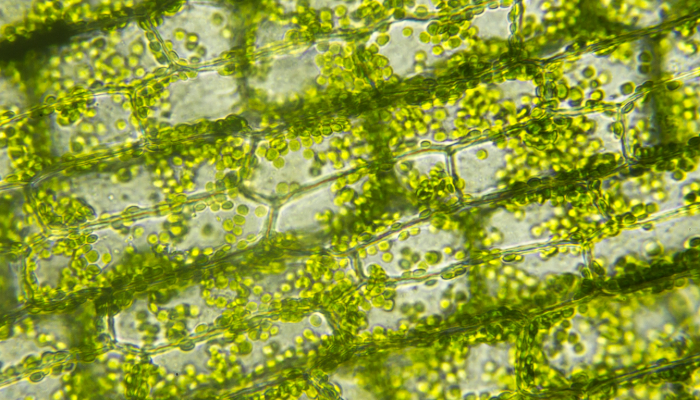
One of the most visible effects of MTU® is improved green leaf retention. Trials demonstrate that MTU® slows chlorophyll loss both under stress and in low-light conditions, such as prolonged cloud cover or canopy shading.
This sustained chlorophyll presence ensures continued light interception and ATP production, supporting:
- Extended grain fill periods
- Continued root growth
- Improved recovery following stress events
By preserving the crop’s energy-producing machinery, MTU® helps maintain productive metabolism when it would otherwise decline.
Beyond its direct effects on photosynthesis, MTU® has consistently been shown to support root system development. Crops treated with MTU® develop larger, more effective root systems, improving access to water and nutrients.
This enhanced rooting complements MTU®’s photosynthetic effects by ensuring that the additional energy generated can be translated into tangible growth responses. Improved nutrient and water uptake also contribute to greater resilience under drought and nutrient-limited conditions.
Abiotic stress rarely occurs as a single event. Crops often experience repeated or prolonged periods of drought, heat or nutrient limitation across a season.
MTU® provides both protective and restorative benefits:
- During stress, it protects chlorophyll and photosynthetic function
- After stress, pre-treated crops recover more rapidly once favourable conditions return
This ability to stabilise physiology before, during and after stress helps crops perform closer to their non-stressed potential, reducing yield volatility between seasons.
Proven performance across crop systems
MTU® is CE marked for use across a wide range of cropping systems, including:
- Broadacre arable crops
- Woody perennials
- Vegetables
- Speciality crops
Across these systems, MTU® has demonstrated benefits in:
- Yield and quality
- Nitrogen use efficiency
- Abiotic stress tolerance
Its consistent performance has led to its inclusion in several IntraCrop formulations, including Status® and the soon to be launched Impetus®, which represents an important evolution in how MTU® is deployed, combining its photosynthesis-protecting properties with additional technologies that support nitrogen assimilation and stress recovery.
While this technical focuses definitively on MTU® itself, further information on Impetus® and how MTU® works synergistically within this formulation will be released in the coming weeks.
MTU® offers a clearly defined, science-led solution to one of the most fundamental challenges in crop production: protecting photosynthesis under stress. By enhancing cyclic electron flow around Photosystem I, MTU® safeguards chlorophyll, sustains energy production and delays senescence, allowing crops to continue growing when conditions are limiting.
As environmental pressures on agriculture continue to increase, technologies that protect core physiological processes rather than simply pushing growth will become increasingly important. MTU® stands as a definitive example of this approach: precise, proven and designed to work with the plant’s own metabolism.

