What is Nutrient Use Efficiency and how can it be improved?
Nutrient use efficiency measures how efficiently a plant can use a given nutrient. It is affected by several, but the three key ones are:
- Availability of the applied nutrient product in all conditions and over time
- Ability of the plant to take up the nutrient
- Ability of the plant to assimilate the nutrient once absorbed.
From a grower’s perspective, this translates into Nutrient Use Efficacy (NUE) – what percentage of the applied nutrient is taken up and used by the crop. This has a clear cost implication but also an environmental one because nutrients not taken up by the crop may cause local contamination.
NUE figures are known to range from as low as 30% in pasture to 70% in wheat, which means that a significant amount of input spend is being lost.
The plant biostimulants contained in Talisman® can play an important role in increasing NUE because they affect these factors directly:
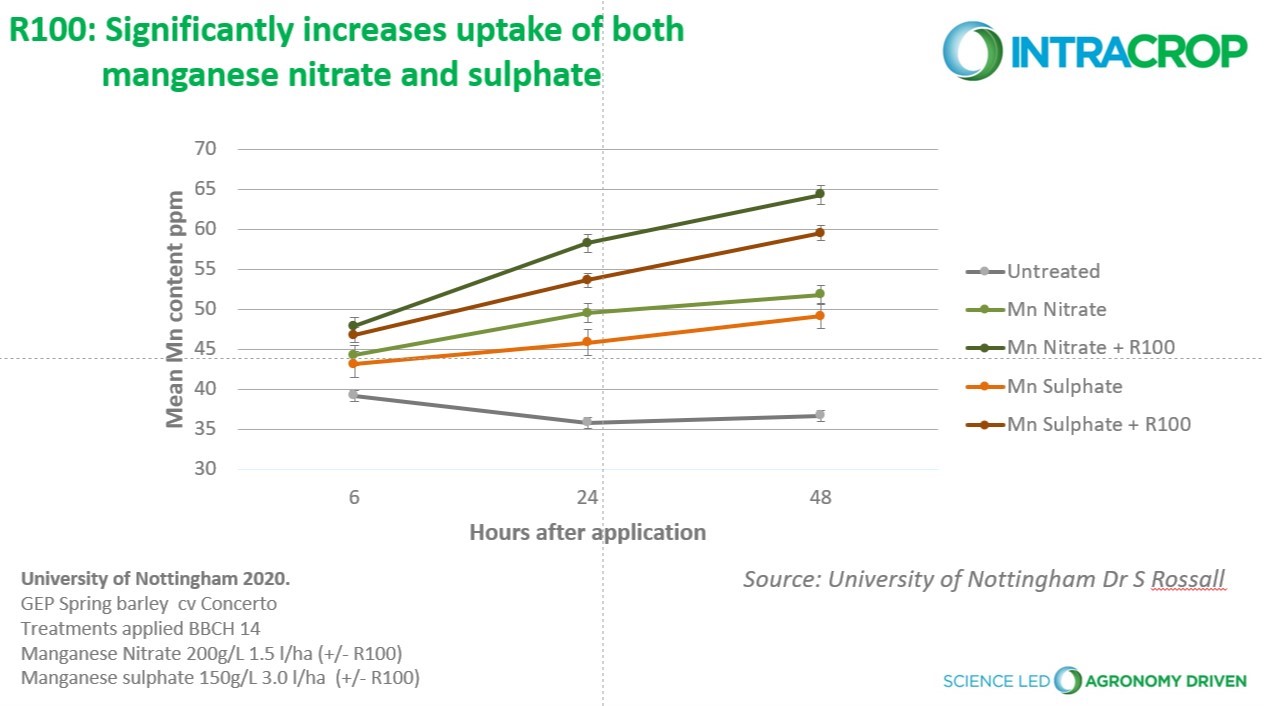
- R100 contains Gamma-PGA, which actively increases the uptake of foliar-applied cations like manganese (Mn2+), copper (Cu2+), zinc (Zn2+) and magnesium (Mn2+) making any foliar spray of Talisman® more efficient.
- Pidolic acid has a key role in nitrate assimilation and applications of products such as Talisman® can help the crop to maximise the benefit from soil and foliar nitrogen applications at key growth stages.
Pidolic acid also has a strong stimulation effect on root development – early applications can increase root mass by up to 40%. More root surface area will significantly improve the NUE of the crop, permitting it to locate the soil nutrients more easily.
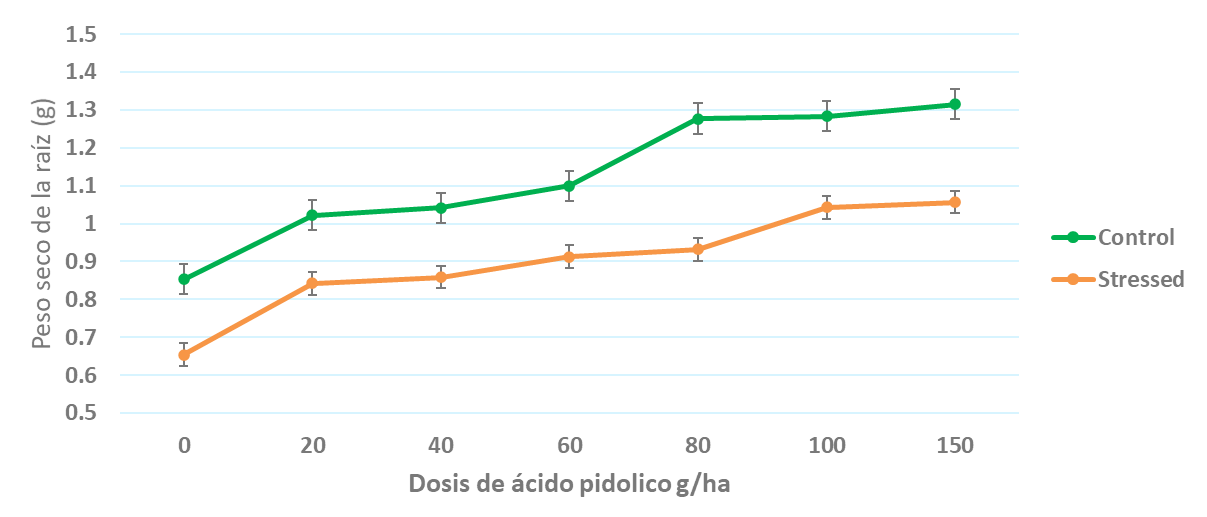
Talisman® contains 40g/l of pidolic acid and our dose-response trials have shown that the optimal root stimulation effect occurs at 80g/l. Therefore, the normal recommended rate for Talisman® is 2l/ha for a non-stressed crop (3l/ha for a stressed crop).
- Higher biomass even in optimal growing conditions.
- Improve green leaf retention during periods of stress.
- Higher levels of chlorophyll during peak growing period.
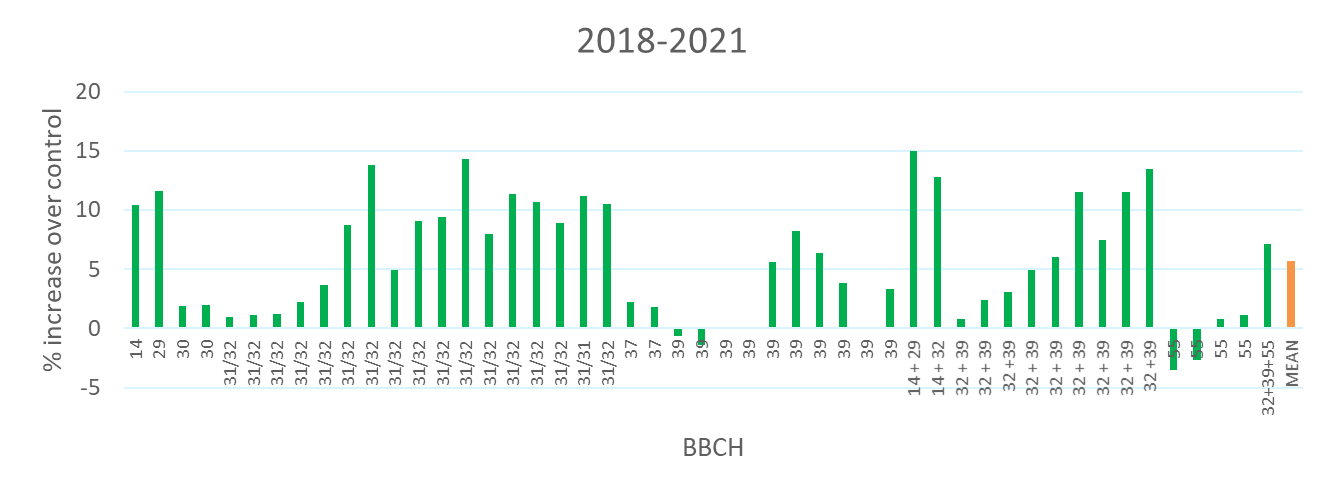
- Average yield response +5.9%
- Activity of pidolic acid circa 21 days so sequenced approach for lasting effect.
- 2/ha during optimal growing conditions.
- 3L/ha if anticipating or experiencing heat/drought stress.
- T1 and T2 applications recommended in cereals.