
How does using Phosphite increase root mass?
The use of phosphite plant biostimulant can lead to up to a 40% increase in root mass in annual sown crops. This enhances the plant’s ability to mine nutrients from the soil, improving nutrient use efficiency (NUE). NUE figures are known to range from as low as 30% in pasture to 70% in wheat which means that a significant amount of input spend is being lost.
Independent research has shown that foliar or seed applications of phosphite increase the levels of cis-Zeatin, a cytokinin (plant hormone) that redirects the flow of auxins that stimulate lateral root development.
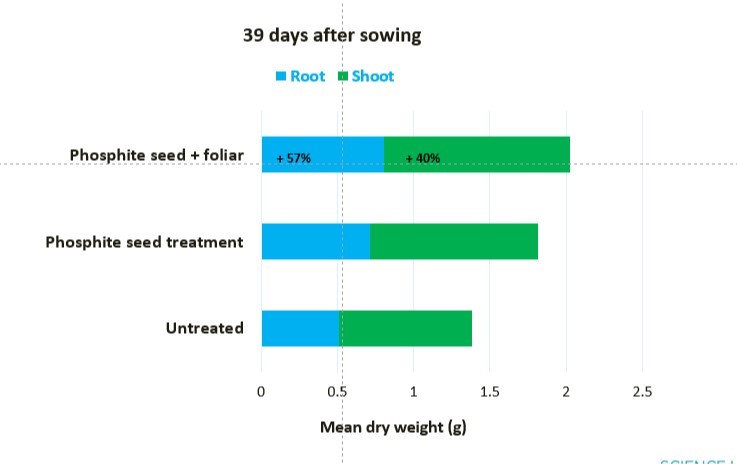
Glasshouse trial by University of Nottingham 2019 on Winter Wheat var: Skyfall.
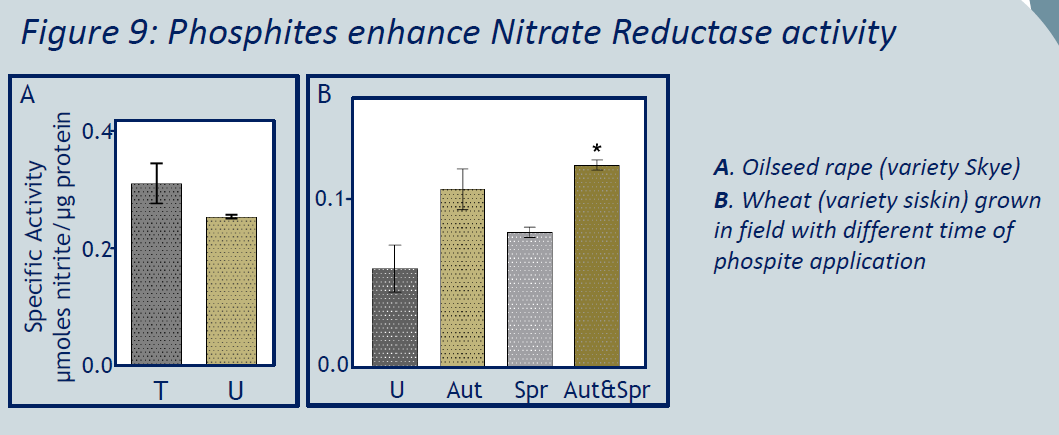
Phosphite also increases the activity of Nitrate Reductase (NR), a key enzyme involved in how the plant converts absorbed nitrate to amino acids for growth. This is reflected in the increased development of the whole plant, including root mass, and can boost yield significantly.
Phosphite improves Nutrient Use Efficiency by:
- More Roots = Make the plant more receptive to nutrients
- Increased NR = Help the plant to use absorbed nutrients more efficiently
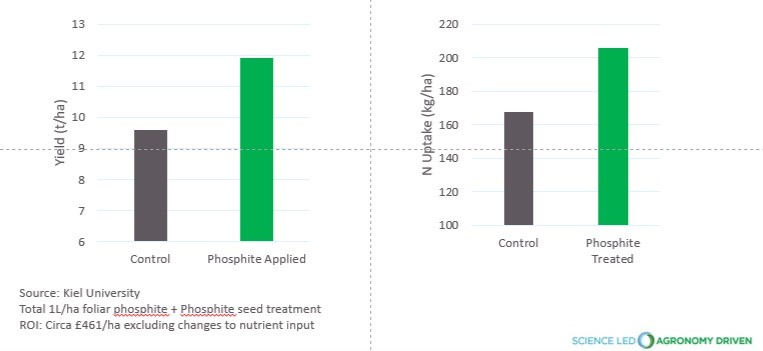
Recent research at Kiel University has shown how phosphite application translates directly to increased nitrogen uptake and final yield in wheat and OSR:
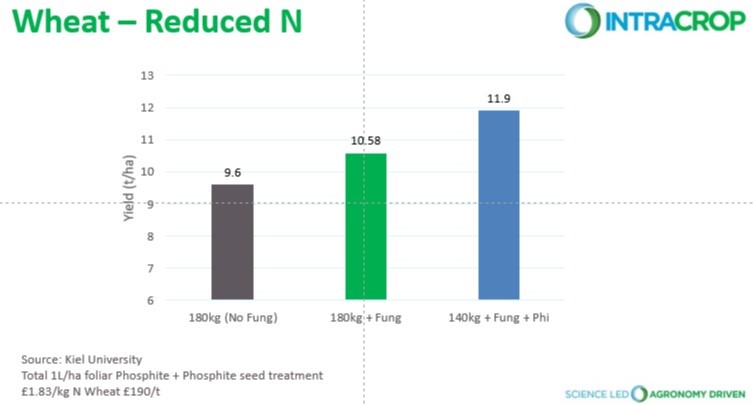
Trials in wheat show the effect of extra roots and NR activity.
Apply phosphite at seed treatment (2-4l/MT Prosper ST®) or at 2-3 leaves in cereals (GS12, 0.75-1.0l/ha Prosper Plus®).
Increase NUE can offer the option to reduce soil-applied fertiliser input without yield loss – offering clear environmental and cost benefits
If you would like to speak to the team about the Intracrop products that contain phosphite, you can book a callback.

