
How is glyphosate efficacy in stubble management improved?
Stubbles or stale seedbeds provide an excellent opportunity to control weeds with glyphosate ahead of a new crop. It is both financially and agronomically advisable to make the most of this opportunity. Glyphosate is the predominant method for weed control on stubbles, and the efficacy of glyphosate products can be affected at a range of stages during the spraying process.
1: Water Hardness
If the water used to spray has a high proportion of charged cations (dissolved minerals) such as Calcium and Magnesium (hard water) they can lock onto glyphosate and form insoluble complexes. These salts are unable to enter the plant, resulting in reduced product performance. Where hard water is a problem, this will often also cause foaming during sprayer filling, slowing down the operator considerably.
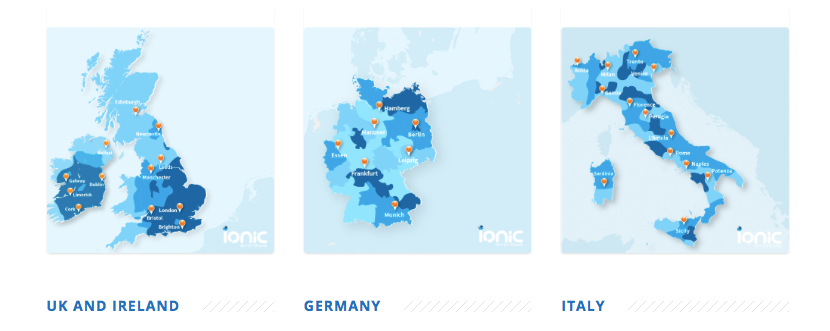
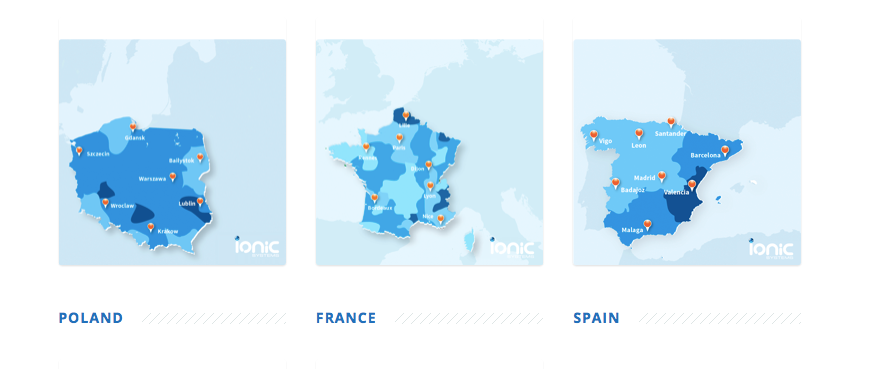
Hard water maps for various countries in Europe. The darker the blue the harder the water.
2: High water pH
If the water has a sub-optimal pH (over 8) this can break down the active substance, meaning less is available to reach the target site (Alkaline Hydrolysis).
3: Spray Drift
Spray drift can cause environmental issues depending on where the spray drifts to as well as efficacy issues. Drift can cause poor spray distribution across the sprayer boom. There are lots of things that can cause spray drift such as high wind, high sprayer forward speed and sprayer boom height to name a few.
4: Droplet retention, coverage and rain fastness on the target surface
If spray droplets roll off the leaf or do not cover it sufficiently this can reduce overall kill and the speed of kill. In addition to this if it rains too soon after the glyphosate has been applied then efficacy will be reduced.
Inferno SC formulation containing 15g/L polyamide, 226g/L ammonium sulphate, 28g/L alkylpolyglycoside + additional pH buffers & water conditioners and anti-foam
| Spray Tank | Boom to Target | On the Target | ||||
| pH Buffer | Water Conditioner | Antifoam | Drift Control | Droplet coverage & Retention | Humectant | Rainfast |
| *** | ** | *** | **** | ** | ** | ** |
Water Quality: Hardness and pH
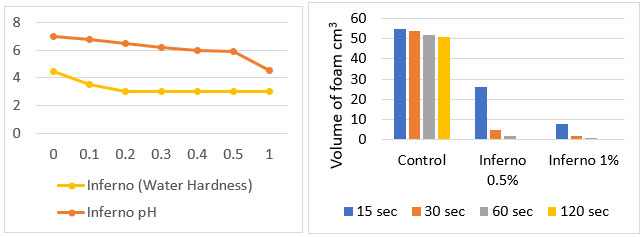
Inferno binds with the hard water cations in a sacrificial way so that the cations cannot bind with the glyphosate. This means that more of the active substance is delivered to the target, enabling better weed control. The anti-foam component of Inferno will quickly reduce any foam in the spray tank meaning the operator does not have to wait for the foam to dissipate, allowing faster tank filling.
Spray Drift
Spray drift work researched by Silsoe spray application unit https://www.ssau.co.uk/ shows that Inferno significantly reduces spray drift when mixed with a 360g/l glyphosate formulation.
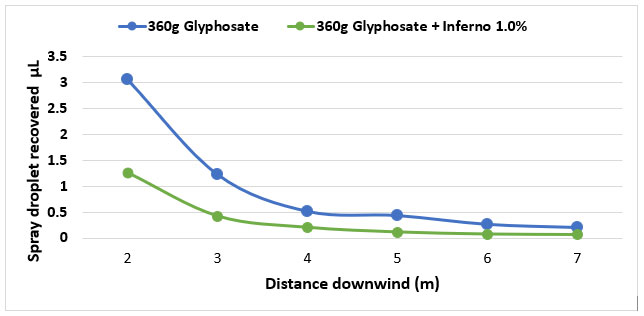
Inferno is effective at reducing drift when the sprayer boom is higher than optimal. Using a sprayer boom at above 50cm from the target is often unavoidable, especially during stubble cleaning operations, due to the danger of damaging the sprayer by hitting the floor.
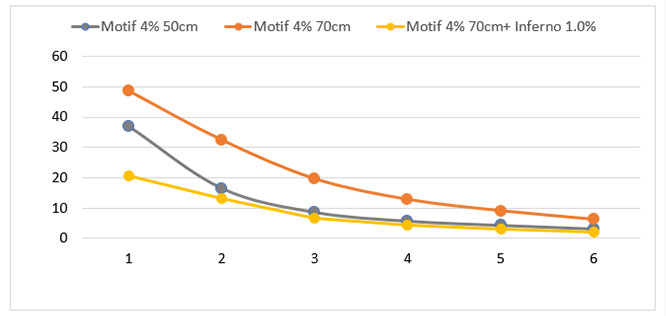
Nozzle: Teejet 11003 flat fan
Pressure: 3.0 bar
Forward speed: 8 km/h
Wind speed: 2 m/s
Better weed Control:
By increasing the delivery of glyphosate to the target weed by reducing the effect of hard water, high pH and spray drift, Inferno can improve both grass and broadleaf weed control in stubbles.
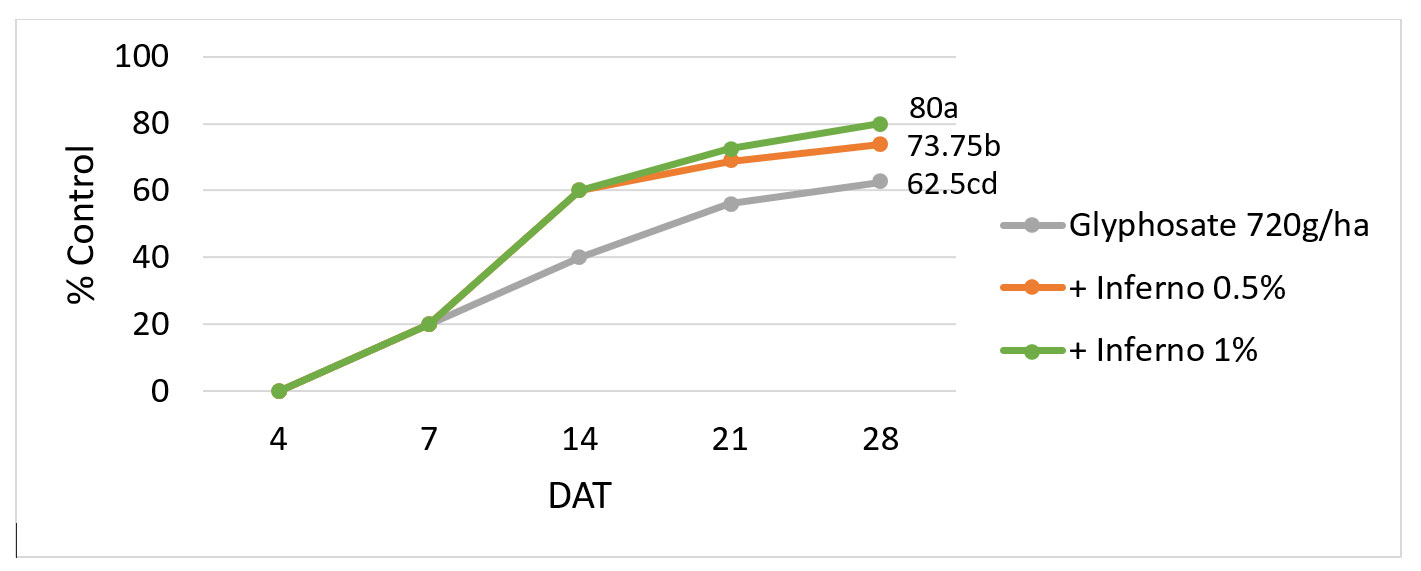
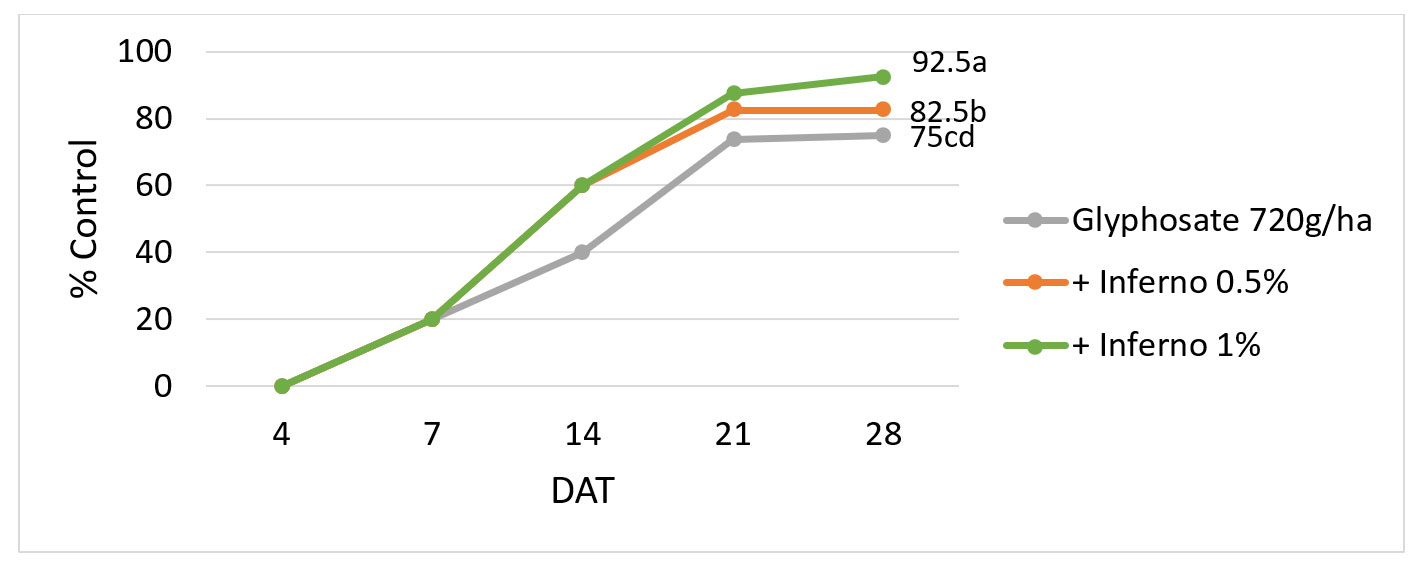
Eurofins: UK; 4 replicates; 28 days; LSD 5.87; cv 6.36
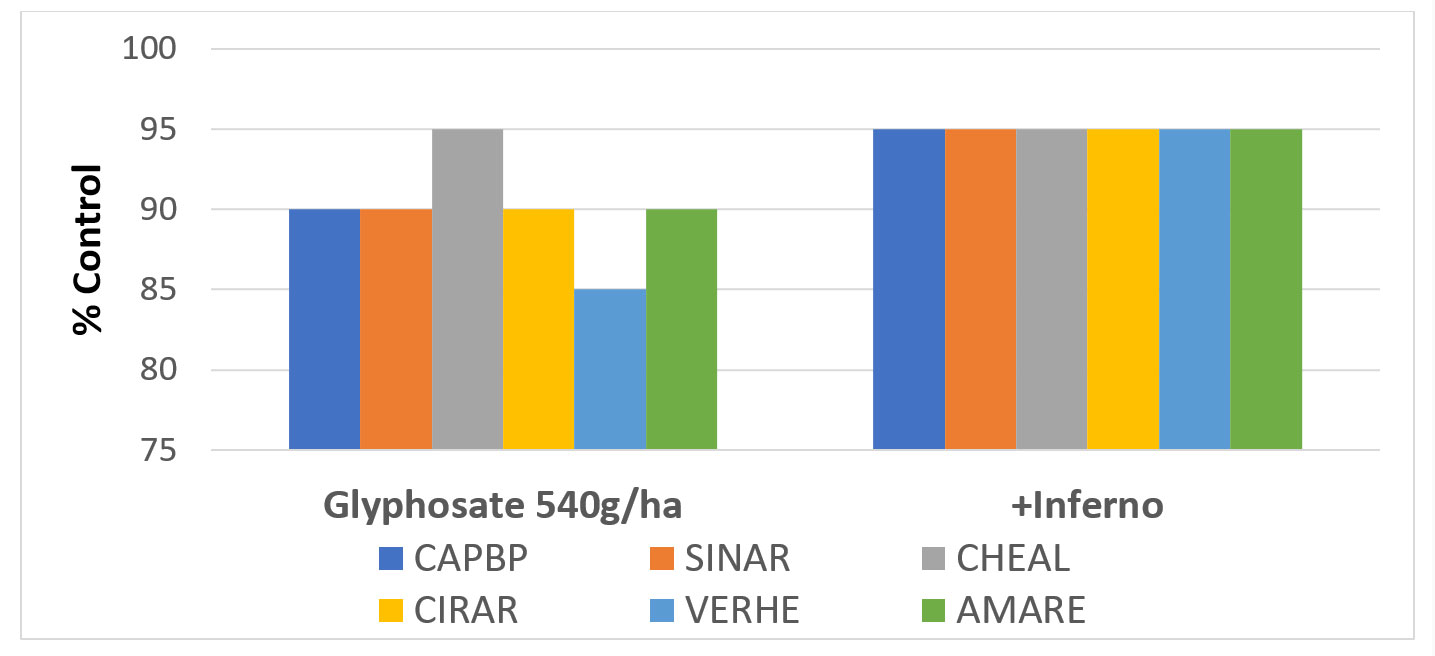
ARI Kromeriz Ltd
Czech Republic, GEP trial. 4 replicates, Treated 11/10/2018, Assessed 14 DAT

