
How does Nutrino Pro increase NUE in Maize?
Nutrino Pro’s impact on Maize
Nutrino Pro has proven results across many crop groups. However, one of the more responsive crops under Nutrino Pro’s portfolio is maize.
Maize is a vital crop within the livestock and AD industry and has a plethora of purposes from game cover to break crops in most arable situations. As a lower fertiliser input crop (compared to cereals), it is easy to see why maize is one of the more favourable forage crops. It his high yielding, perfect for forage cattle feed, has high starch content, is low maintenance when established and is rapidly increasing in market value, whether for use in biodigesters or due to the growth in popularity of grain maize in areas such as northern France and southern UK.
Over the past couple of years, the MGA (Maize Growers Association) have been analysing the positive affect Nutrino Pro has on the crop and the benefits to the end consumers when Nutrino Pro is applied.
With the UK experiencing variable weather patterns, there is an increased risk in nutrient deficiency. As nitrates will have leached due to excess winter rainfall, or might be limited in availability due to a lack of soil moisture, it is imperative to replace and supply the crop with a sufficient level of nitrogen to allow for optimal crop growth. Nutrino Pro is slow-release nitrogen, making it an excellent choice for seasons such as this.

Fig. 1 – N response curve in maize
The urea components in Nutrino Pro come in 2 forms: readily available or within a polymer (slow release). The Ureic N is the readily available form of urea where as the monomethylene urea, methylene dilurea and triazone polymers need to degrade to release their nitrogen. This breakdown is facilitated by enzymes in the plant allowing Nutrino Pro to be highly efficient source of readily available nitrogen whilst continuing to feed N to the crop for a further 6-8 weeks.
The combined addition of Mg and S into Nutrino Pro makes it a very desirable product for maize applications due to their importance in chlorophyll production and protein formation. Nutrino Pro’s 60min rainfast formulation ensures that there is a high rate of product absorption into the leaf and that any wash off caused by rain does not affect efficacy.
MGA conducted a trial at Harper Adams University where a maize crop was subjected to 95kg N/ha from all sources of N, whether it was a granular or liquid application. Out of 14 products, an application of Nutrino Pro trumped other urea polymer products like Efficient 28, with a Dry Matter Yield (t/ha) value of 20.39 t/ha and Dry Matter Content (%) of 31.21%.
Nutrino Pro outperformed its rivals due to the addition of 2 biostimulants; Pidolic Acid and R100. They allow for nutrients to be take up more effectively as well as protection against abiotic stress events effecting nitrogen assimilation. Furthermore, the additional nutrients; Mg and S play a pivotal role in the formation of chlorophyl, energy metabolism and forming amino acids and no other competing product in this trial contained those nutrients.
Agriculturally, the benefits of having a higher starch content in dry matter along with the volume of dry matter tie in perfectly with cattle productivity. Calculations shown below using indicative market prices.
ME Value: 20,000 MJ (Milk terms @ 40ppl and 5.7MJ/litre milk) = 3508l x 40ppl = £1403
ME value over untreated (95kg seedbed N/ha): 49500 MJ = 8684l x 40ppl = £3473
The two calculations show firstly, the value of milk produced where cattle were fed the untreated control maize, that only received 95kg seedbed N/ha, with milk pricing based at 40 pence / litre and secondly, the difference in revenue where Nutrino Pro treated maize was fed to cattle.
An application of Nutrino Pro therefore increases cattle productivity by increasing the starch content within the forage.
Results in 2024
After a successful trial conducted in 2023, the MGA agreed to trial Nutrino Pro for a second year looking a similar metrics. Although the trial conditions were flagged as unusual, Nutrino Pro still came out as a top contender for dry matter yield and dry matter content compared to competitors like Efficient N28. Further analysis on Starch content and dry matter percentage showed that Nutrino Pro outperformed all other foliar Nitrogen products with values of 32% starch content and 38.2% dry matter.
Following the increased interest and popularity of grain maize production in the UK and Nutrino Pro’s success in maize trials, the MGA conducted trials looking at how an application of Nutrino Pro affects grain maize yield and grain protein content.
The results stipulated that an application of Nutrino Pro along with a reduced N base regime outperformed a N regime solely derived from seedbed applied Nitrogen by increasing grain protein content and maintaining a suitable early harvest date. For example the standard N regime of 150kgN base plus Nutrino Pro decreased grain moisture and increased protein content compared to the 150kg N base treatment alone.
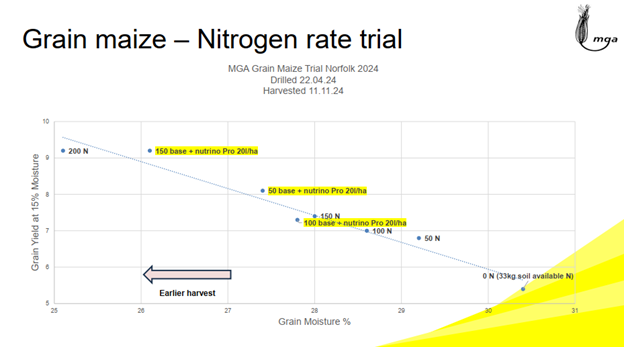
Fig. 2 – Results showing Nutrino Pro’s positive affects to N standard regimes
Summary
Maize drilling has started early this year due to unusually dry conditions, making foliar products like Nutrino Pro even more necessary. Thanks to its slow-release nitrogen technology and dual biostimulants—R100 and Pidolic Acid—Nutrino Pro delivers consistent nitrogen availability and enhanced nutrient uptake under challenging conditions. It has proven particularly effective in increasing dry matter yield and starch content in maize, which directly improves cattle productivity. Notably, Nutrino Pro also performs exceptionally well under reduced nitrogen regimes, offering both financial and environmental benefits by compensating and even surpassing standard N programmes. Trials have also shown an increase in grain protein content for grain maize applications, highlighting the product’s value across multiple maize use cases.

