
How can I combat salinity stress?
The risks of salinity stress
As agriculture faces increasing climate pressures, salinity stress is becoming a more common trigger for abiotic stress, especially in regions with limited rainfall, saline groundwater, or poor-quality irrigation. While drought and heat tend to be the more frequently discussed causes of stress, salinity is equally as damaging to crop physiology, yield potential, and ultimately, profitability.
Across IntraCrop trials in Europe and North Africa, abiotic stress caused by salinity has emerged as a limiting factor in vegetable, tree fruit, and cereals, with symptoms ranging from impaired growth and yellowing leaves to full crop failure. Thankfully, technologies like biostimulants are proving to be powerful tools for growers when it comes to mitigating against this stress.
What causes salinity stress and how does it affect crop growth?
Salinity stress occurs when salt levels in the soil or irrigation water exceed what the plant can tolerate. The most common contributors are:
- Sodium (Na⁺) and Chloride (Cl⁻) ions from saline groundwater
- Over-application of fertilisers or manures
- Evaporation in dry climates, which concentrates salts at the soil surface
Salinity causes osmotic stress, making it more difficult for crops to absorb water. It also leads to ionic toxicity, damaging roots, leaves, and reproductive tissues. This can lead to:
- Inhibited seed germination and root establishment
- Leaf chlorosis and necrosis
- Distorted flowering and reduced fruit and seed set
- Reduced nutrient uptake and efficiency
Status® and MTU: mitigating against salinity stress
IntraCrop’s flagship product, Status®, a combination of MTU and pidolic acid, has been shown to improve plant resilience under saline conditions in several ways:
- Improved Root Establishment: Status® enhances lateral root development, enabling crops to access deeper, less saline water zones and nutrients.
- Enhanced Chlorophyll Stability: MTU has been proven to inhibit chlorophyll degradation, allowing plants to continue photosynthesising and growing even under ionic stress.
- Hormonal Modulation: Status® helps reduce abscisic acid (ABA) accumulation, a hormone that signals stress and halts growth. This allows the plant to maintain development rather than shut down.
- Reduced Ion Accumulation in Plant Tissue: In citrus trials, treated plants had significantly lower sodium and chloride accumulation in fruit, improving quality.
Salinity Trial Highlights
Spinach (Spain, IC25-0112)
- Issue: High saline groundwater causing leaf yellowing and reduced yield
- Treatment: Status® 0.25L/ha at BBCH 41
- Results:
- +45% yield increase over control
- Significant reduction in visible stress symptoms
- Improved regrowth for multiple harvests
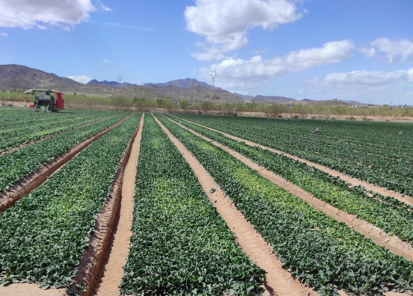
High salt stress pressure from high salinity in ground water was impacting this spinach – this is an untreated plot.
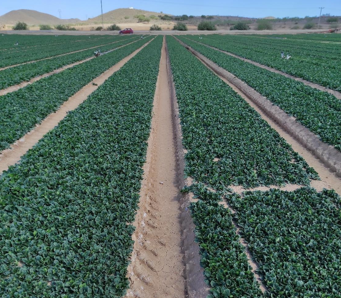
This spinach was treated with Status® – the application reduced this stress thus increasing crop yield.
Lettuce (Spain, IC25-0111)
- Issue: Saline irrigation water with EC ~7 mS/cm
- Treatment: BBCH 39–41, 0.25L/ha
- Results:
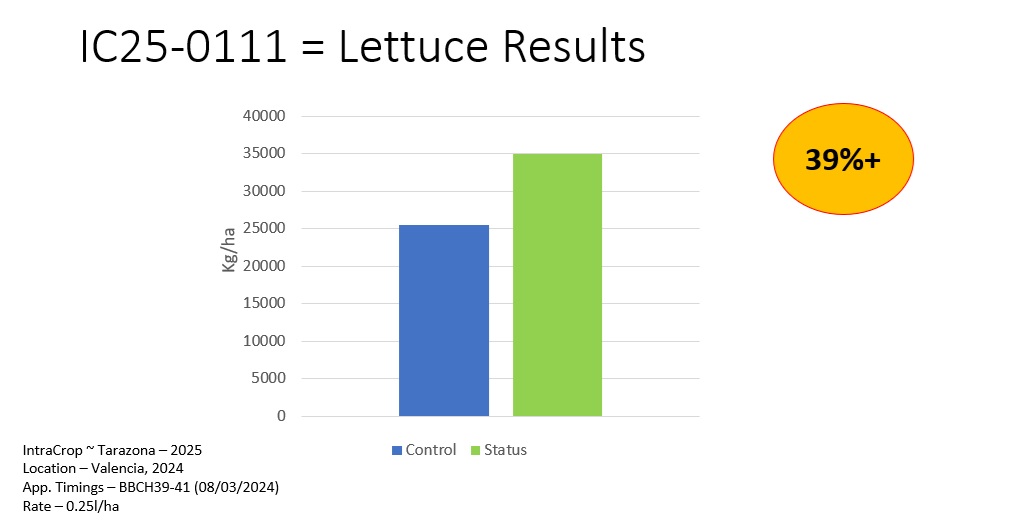
- Canopy cover increased from 65% to 90%
- 39% increase in harvest weight per hectare
- Marketable heads per hectare increased significantly
Citrus (Spain, IC25-0071)
- Challenge: Salinity in soil and water during flowering
- Treatment: 0.25L/ha at flowering
- Results:
- Sodium and chloride concentrations in fruit reduced
- Yield improved by over 8%
- Enhanced flower and sapling health
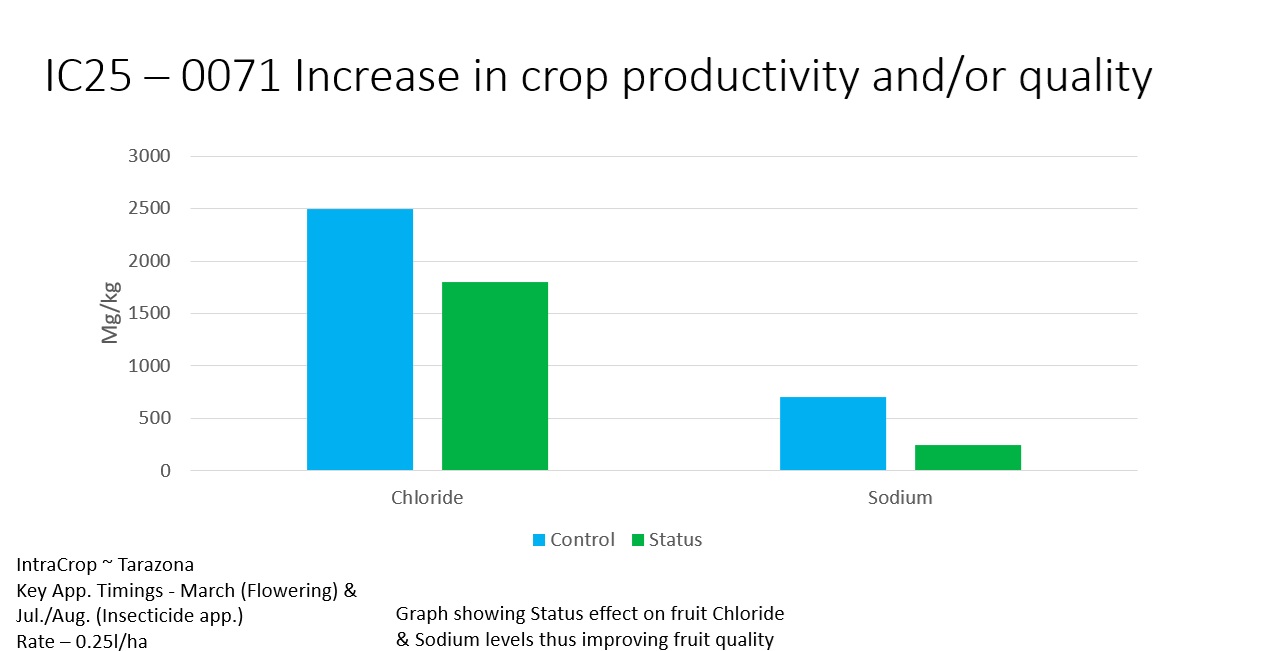
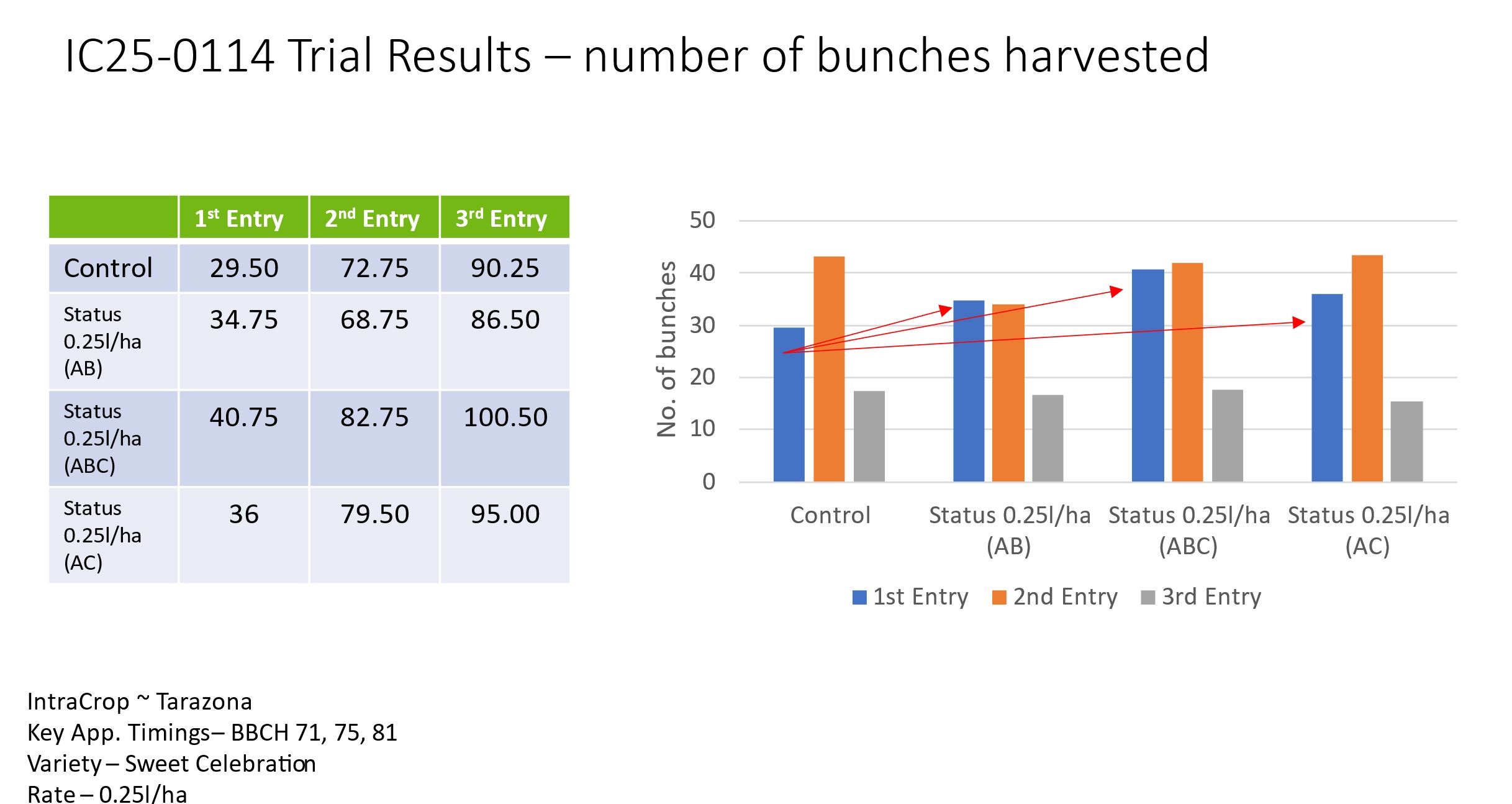
Table Grapes (Spain, IC25-0114)
- Key finding: Salinity tolerance allowed consistent yield under fluctuating water conditions
- Results:
- Higher bunch number and average weight
- Control: 90.25 bunches
- 2x Status® applications = 95 bunches
- 3 x Status® applications = 100.50 bunches
- Compatibility with existing PPP programs
- Higher bunch number and average weight
Salinity can cause cumulative stress that gets worse over time if is not well managed. Using biostimulants like Status® proactively can:
- Support early establishment in high-saline soils
- Maintain productivity where alternative water sources are limited
- Extend the economic life of crops like vines, citrus, and lettuce by reducing salt stress damage
Trials show that Status® helps crops bounce back faster from salinity-related damage, allowing growers to protect their ROI.
Recommendations for Agronomists
- Apply Status® at early growth stages (BBCH 39–41 for leafy crops, pre-flowering for trees/grapes) to improve the plant’s resilience ahead of stress periods.
- Use in regions with known saline irrigation water or compacted soils.
- For crops like lettuce and spinach, repeat applications can support longer harvest windows and consistent market quality.

