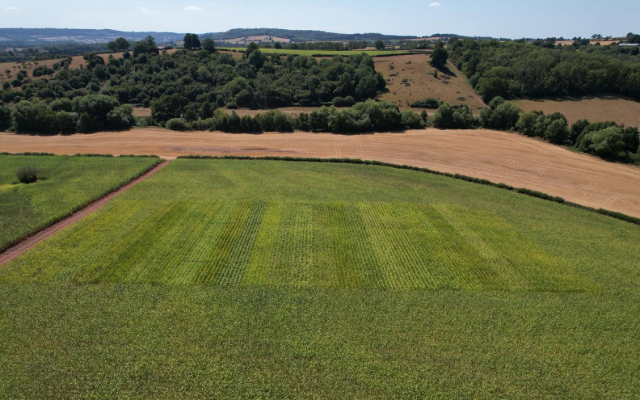
Can Nutrino Pro help maize perform better?
Maize crops require significant amounts of nitrogen during their key growth stages. This means it is vital that growers ensure nutrients are available at the right time to maximise crop performance. IntraCrop’s controlled-release foliar nitrogen product, Nutrino Pro, offers a way to improve nitrogen use efficiency, support crop development and therefore ultimately increase yields.
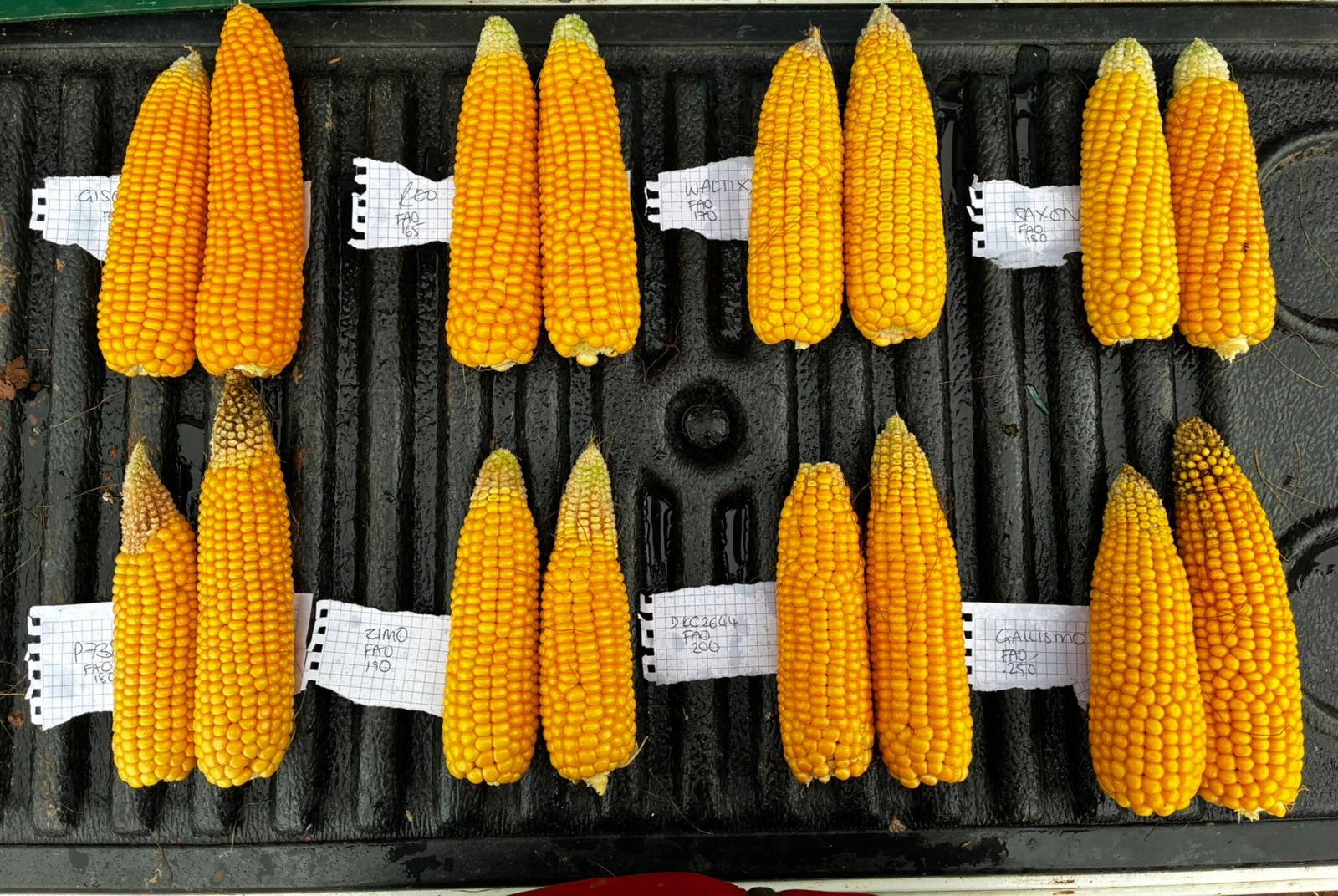
Recent maize variety trials conducted by Frontier agronomist Gwen Patch in the West of England have highlighted the potential benefits of Nutrino Pro across different maize varieties. The trials, carried out in the West of England, compared 26 different maize varieties to assess the impact of Nutrino Pro on cob development.
Applying Nutrino Pro at 20 L/ha resulted in an average 24% increase in cob weight across the varieties tested. These findings are encouraging because they demonstrate a positive average response across a broad selection of maize varieties, suggesting that the benefits of improved nutrient use efficiency could extend across different genetic backgrounds.
The results also complement IntraCrop’s wider maize trials programme. Across 13 GEP replicated trials conducted in five countries, an application of Nutrino Pro at the eight-leaf stage delivered an average grain yield increase of 0.94 t/ha.
For maize, Nutrino Pro is ideally applied between the eight-leaf stage and tasselling (BBCH 18–59), when crop biomass and leaf interception are sufficiently developed to facilitate effective foliar nutrient uptake.
Maize presents a particular challenge when it comes to nitrogen use efficiency. Although more than 60% of the crop’s nitrogen requirement occurs from the V9 growth stage onwards, conventional fertiliser programmes often apply between 75% and 100% of the crop’s nitrogen before or at planting.
This creates a potential mismatch between nitrogen availability and crop demand, particularly when dry soil conditions limit nutrient uptake or rainfall contributes to nitrogen losses through leaching.
Nutrino Pro is designed to help address this challenge by delivering nitrogen directly to the crop’s leaves during periods of high nutrient demand. Combining controlled-release nitrogen with magnesium, sulphur and two complementary plant biostimulants, Nutrino Pro provides a sustained supply of nutrients while supporting the plant’s ability to absorb and utilise them efficiently.
Unlike conventional nitrogen fertilisers, Nutrino Pro combines readily available urea nitrogen with longer-chain urea formaldehyde polymers, providing controlled nitrogen release over approximately six to eight weeks.
The formulation incorporates two plant biostimulants that work alongside the nitrogen component:
- Pidolic acid: Supports nitrogen assimilation within the plant, helping maintain growth and nutrient use efficiency, including during periods of environmental stress.
- R100®: Improves magnesium uptake and utilisation while supporting chlorophyll production, photosynthetic capacity and green leaf retention.
Together all of these components help crops make more effective use of available nutrients. Nutrino Pro can achieve up to 95% nitrogen use efficiency, compared with typical figures of around 50% for conventional soil-applied nitrogen fertilisers. For maize growers, this offers the potential to improve nutrient availability during critical stages of development while reducing reliance on soil-applied nitrogen.
The recommended application rate is 20–30 L/ha, depending on crop requirements and the wider nutritional programme. Applying Nutrino Pro at this stage helps align nitrogen delivery with the crop’s increasing nutrient demand, rather than relying entirely on nitrogen applied earlier in the growing season. The product is also rainfast within 60 minutes and has excellent crop safety characteristics, offering flexibility within practical crop management programmes.
To find out more about Nutrino Pro and how it could fit into your maize nutrition programme, contact the IntraCrop team or speak to your agronomist.

