Biostimulant Status use in Scotland shows promise
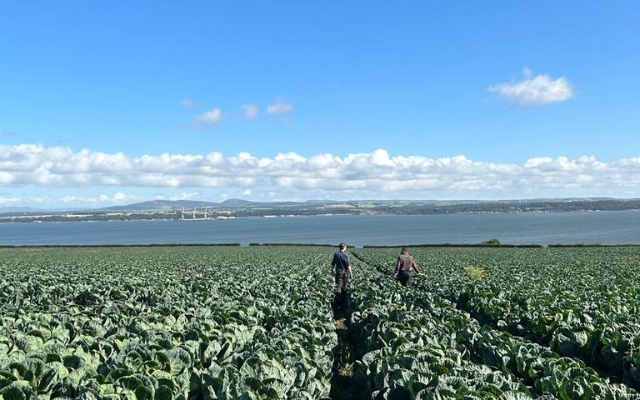
This month Jack Hill and I have been in Scotland, looking at the impact of our biostimulant Status on a variety of vegetable crops. IntraCrop is a science-led organisation, which collaborates with research institutes and universities, as well as growers, to conduct detailed, independent trials to demonstrate the efficacy of our products. The Scottish replicated vegetable trials are run by a farmer owned cooperative, in the Fife region and include brassica crops such as broccoli and sprouts, root crops and asparagus.
Status is a pure biostimulant which contains Intracrop’s patented biostimulant technology MTU®, as well as Pidolic Acid. This combination provides a range of benefits including increasing crop resilience in times of abiotic stress, increased lateral root growth and shoot growth, and improved nutrient use efficiency. As I have recently joined IntraCrop as part of my university degree, this was my first chance to see Status in action and I was interested in the differences we might see in such different vegetables.
First, we visited a carrot trial. Initial visual observations didn’t show obvious differences in canopy cover and overall crop health. However, it has been a kind growing season with plenty of rainfall and cool temperatures. Some early drilled carrots did suffer from stress this year due to a longer 5–6-week dry spell in late spring. However, the carrot trial will go to yield with the ‘supermarket test’ carried out to see if biostimulants have still improved marketable yield and storability. It was a similar situation in the broccoli and asparagus in terms of canopy cover and GLA, however the yield, average head weight & quality data will be critical.
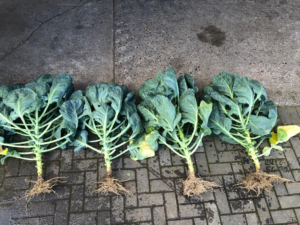
In tramline trials at the sprout farm further south near Edinburgh, the growers we met were trialling biostimulants to assess whether improvements in crop health and yield could be seen across their fields. We took two digs each from untreated and treated tramlines, and the results were immediately obvious. The lateral root growth on the treated crop was double that of the untreated crop. In the treated crop there was a much higher level of small, fine roots, which are essential for nutrient cycling within the plant. The canopy also indicated a healthier crop, with larger and greener leaves showing an improvement in chlorophyll levels. It was exciting to witness such significant improvements in health at such early stages of some of our crop trials.
I will be spending some time this winter reviewing all the trials data for IntraCrop and presenting it in a way that helps growers to understand the benefits of biostimulants and how they can improve crop establishment, resilience and yields as part of a crop management plan. This is going to be a really interesting year and I feel lucky to be able to spend my placement year with a company that focuses on the science behind its products.
Find out more about Intracrop’s product range or contact the team on admin@intracrop.co.uk.
This blog was written by Chloe Freeman.
27th September 2023
